


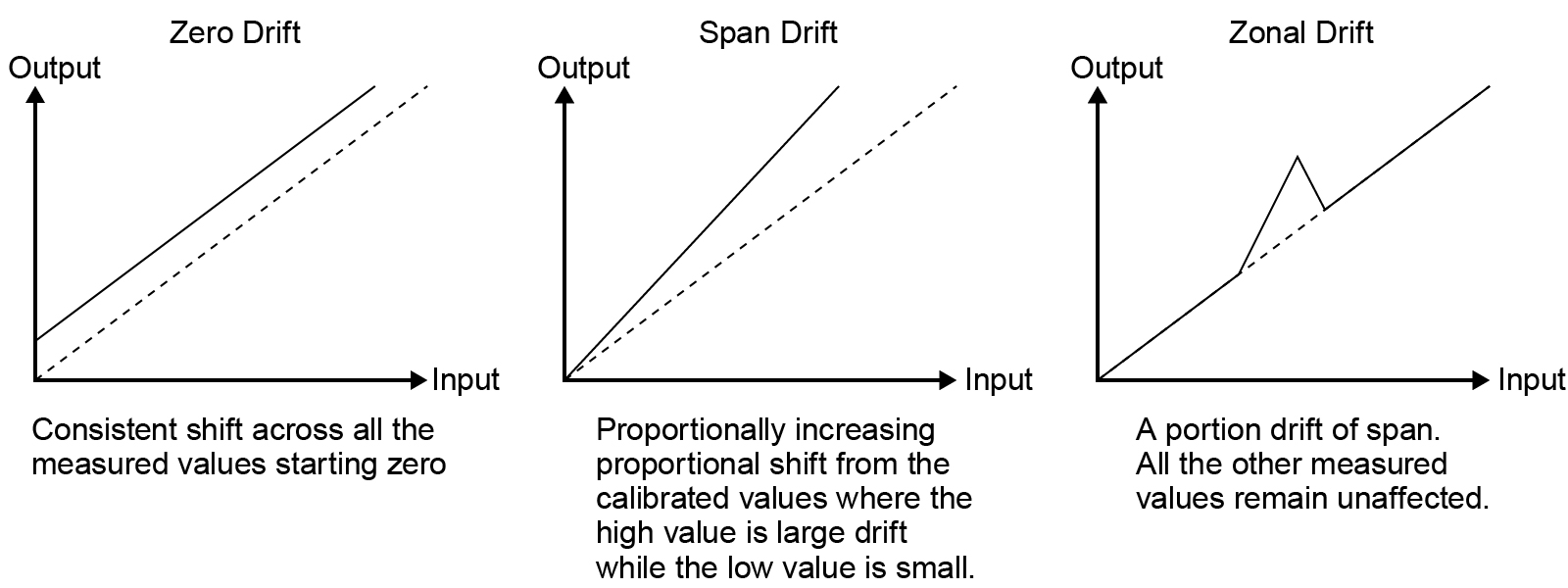
In the context of power supplies and measurement instruments, drift refers to the gradual change in an output parameter (such as voltage or current) or a measured value over time, occurring even when external conditions--including ambient temperature, input voltage, and load--remain constant. It is a key indicator of the device's stability.
For instance, even if a power supply is set to a specific voltage and the surrounding environment remains unchanged, the output level may fluctuate minutely over several hours.
Drift is primarily caused by internal factors, such as the self-heating of components during operation (warm-up drift) or the aging of electronic parts over long periods (long-term drift).
Related Technical Articles
- What is a Power Supply? Types and Applications
- What is a Power Supply? (Basic Knowledge)
- Safety and Usage of High Voltage Power Supply
- An Introduction to DC Power Supplies
- What is a Bipolar Power Supply? (Basic Knowledge)
- Electronic Loads: An Introduction to Principles, Types, and Uses
- What is an AC Power Source? - Basic Knowledge -
- Linear vs. Switching Power Supplies: Key Differences Explained
- Types of X-ray Tubes and High-voltage Power Supplies
- High Voltage Measurement Method
- How to Choose a DC Power Supply: Key Points to Consider
- Difference between DC power and AC power
- A Beginner's Guide to Using Power Supplies Safely
- A Guide to Using DC Power Supplies Correctly and Safely
- HVPS for Lab Analyzers: Key Considerations for Stability and Noise
- Amplifier Basics: Principles, Operation, and Key Considerations
- Method of Generating Direct Current (DC) Power