


X-ray inspection of BGA and CSP for missing parts, shorts, voids, and joint conditions
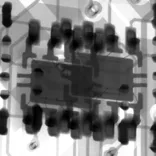
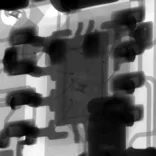
X-ray inspection is a critical non-destructive method for evaluating solder joint integrity in BGAs (Ball Grid Arrays) and CSPs (Chip Scale Packages). This process visualizes the solder joints between the package and the PCB to detect defects such as ball misalignment, bridging, non-wet opens, cracks, and voids. Since the solder terminals of BGAs and CSPs are hidden beneath the package, X-ray systems are essential for surface mount technology (SMT) quality control. As semiconductor packages become smaller and denser, high-magnification microfocus X-ray inspection systems are required to ensure accuracy.
BGA X-ray inspection items
Bridging, non-wet open, void, no bump, no pad, no solder, misalignment, tilt, bump size


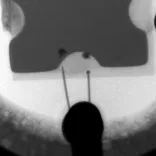
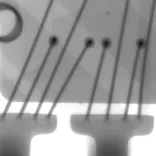
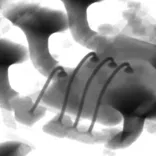
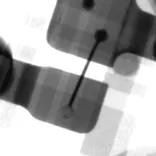
Wire bonding inspection for ICs and LEDs: Breaks, poor connections, and wire sweep
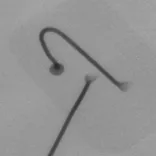
Verifying the wire bonding status in semiconductors, such as ICs and LEDs, is essential for ensuring component reliability. Matsusada Precision's X-ray inspection systems are ideal for detecting minute wire breaks, connection defects, and wire sweep in encapsulated electronic devices.
X-ray inspection of battery winding and capacitor internal structures
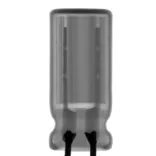
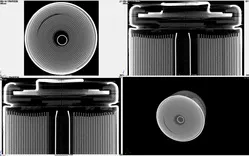
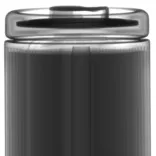
Matsusada Precision's non-destructive X-ray inspection systems allow for the detailed examination of internal components without damaging the sample. They are widely used to inspect the winding condition of battery electrodes, as well as the alignment of electrolytic paper and foils in capacitors.

Void analysis for power devices (IGBTs, MOSFETs) and IC chips
Packaging and mounting techniques for power semiconductors--such as IGBTs, IPMs, SiC, and GaN devices--require strict control of solder void fractions to ensure heat dissipation and reliability. Industry standards often require solder joint void ratios to be maintained below 25%. High-precision X-ray inspection is essential for accurately measuring void ratios and solder quantity in these demanding applications.
Semiconductor packaging and mounting requiring accurate void measurement at critical solder joint interfaces
- LGA (Land Grid Array)
- QFN (Quad Flat No Leads)
- COB (Chip On Board)
- DBC (Direct Bonded Copper) Substrate
- AMB (Active metal brazed) Substrate

X-ray inspection of relay and switch contact conditions
Our X-ray non-destructive inspection systems are used to find out the cause of switch malfunction. It detects disconnection, contact fusion, melting, or welding. It is also available to detect contact instability caused by the deformation of the internal components due to external shocks.

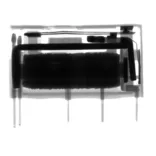
X-ray inspection of the state of the solder and crimping inside connectors
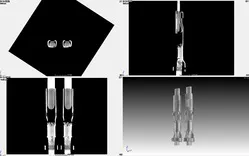
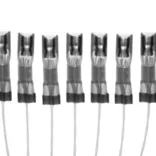
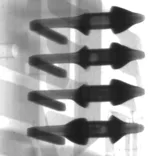
Using X-ray inspection, Pass/Fail judgments for the joint parts of a connector and a wire, solder condition, crimping, pressure welding, and piercing connections are performed.

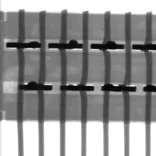
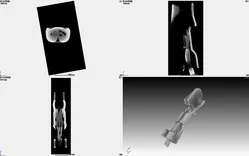
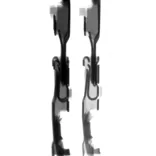
Internal inspection of plastic molded and insert-molded parts
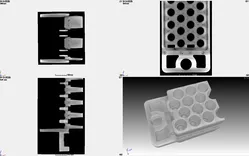
Our 3D Computed Tomography (CT) X-ray systems allow for the non-destructive measurement of voids in thick plastic parts, verification of insert positioning, and detection of missing or double inserts. They can also analyze glass fiber orientation to identify the causes of warpage in reinforced plastics.

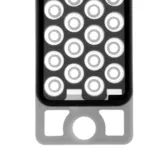
X-ray inspection of aluminum die-cast products for pits and cracks
Defects such as pits and cracks that adversely affect durability can be inspected without destroying the object.
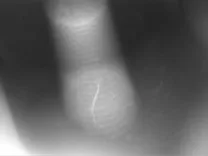
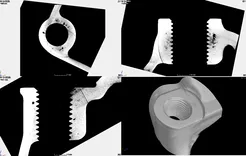
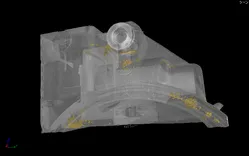
Blowholes in welds have a significant impact on strength and toughness. X-ray inspection systems can inspect for blowholes without destroying the weld.
Bottle and cap mating condition
The horizontal models of Matsusada's X-ray inspection systems are suited to observe a mating position from the side.

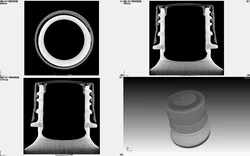
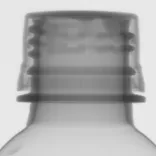
In addition, a CT scan function is helpful for a detailed examination.
X-ray inspection of internal conditions of various sensors and detectors
X-ray internal inspection is available for observing electrical or mechanical defects in sensors and detectors.
Defective X-ray image analysis
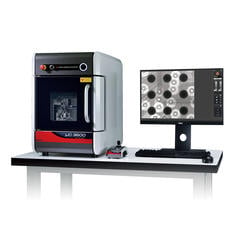
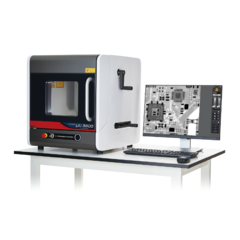
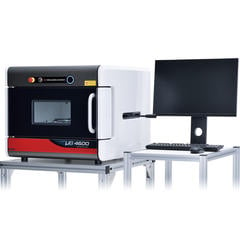
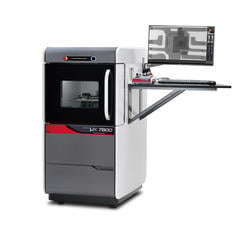
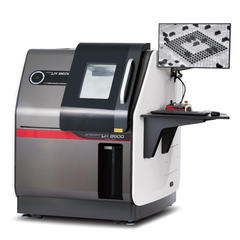
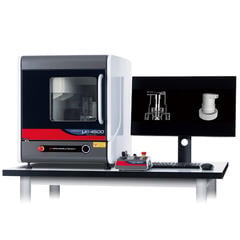
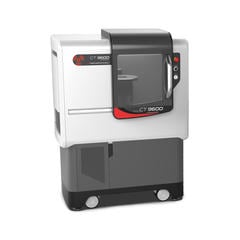
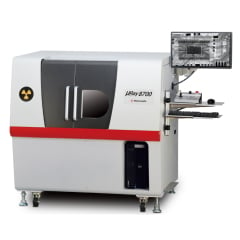
Recommended products
Related Technical Articles
- Back-End Semiconductor Manufacturing Process
- Selecting an X-ray Inspection System
- Principles of Radiography
- Safe Operation of X-ray Inspection Systems
- Basics and Principles of Computed Tomography (CT)
- Non-Destructive Testing: Types and Applications
- What are X-rays? (Basic Knowledge)
- How to Acquire High-Quality Computed Tomography (CT) Images - X-ray NDT series (1)
- A Guide to X-ray CT Images: Formats, Viewing, and Applications - X-ray NDT series (2)
- X-ray Image Processing and Automated Inspection - X-ray NDT series (3)
- What is the difference between Radioactivity, Radiation, and Radioactive Materials?
- Understanding Radiation: Effects on the Body and X-ray Safety