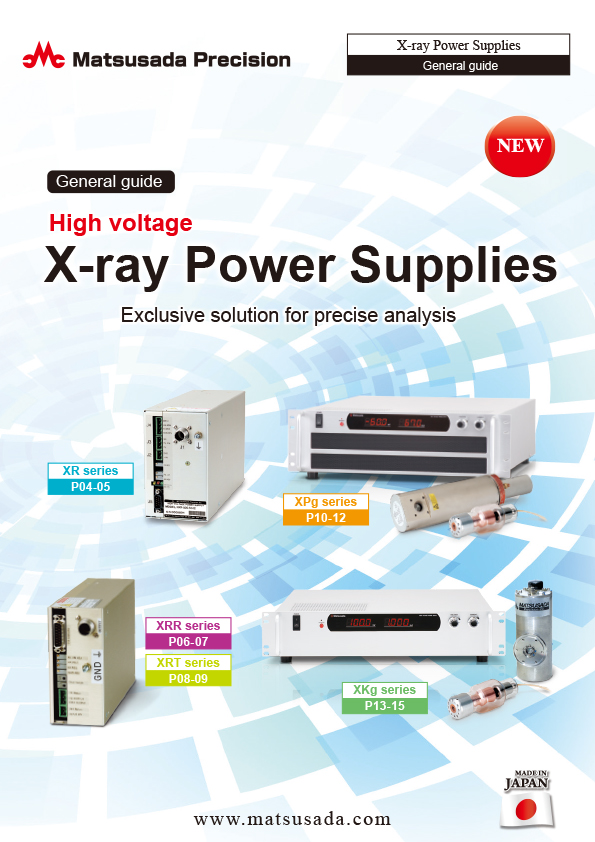
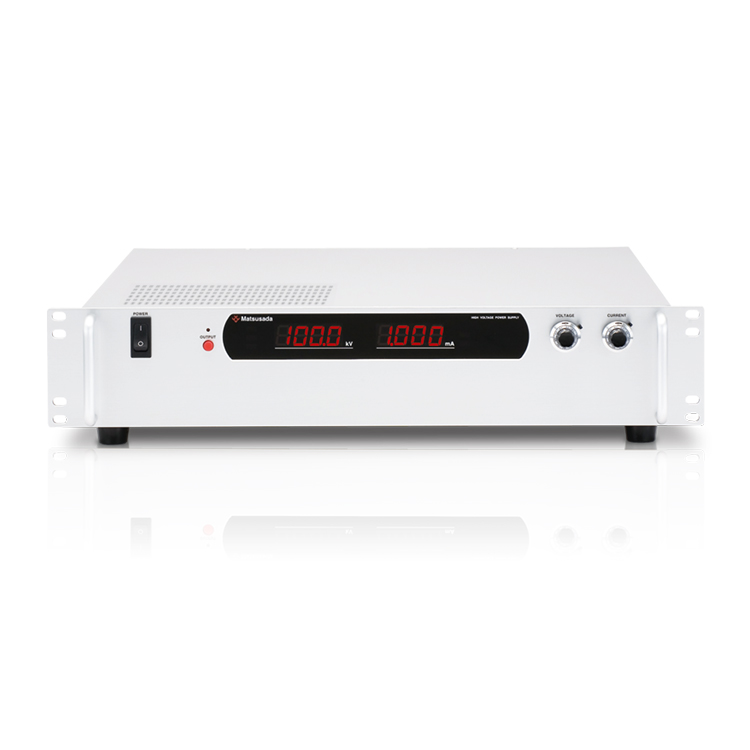
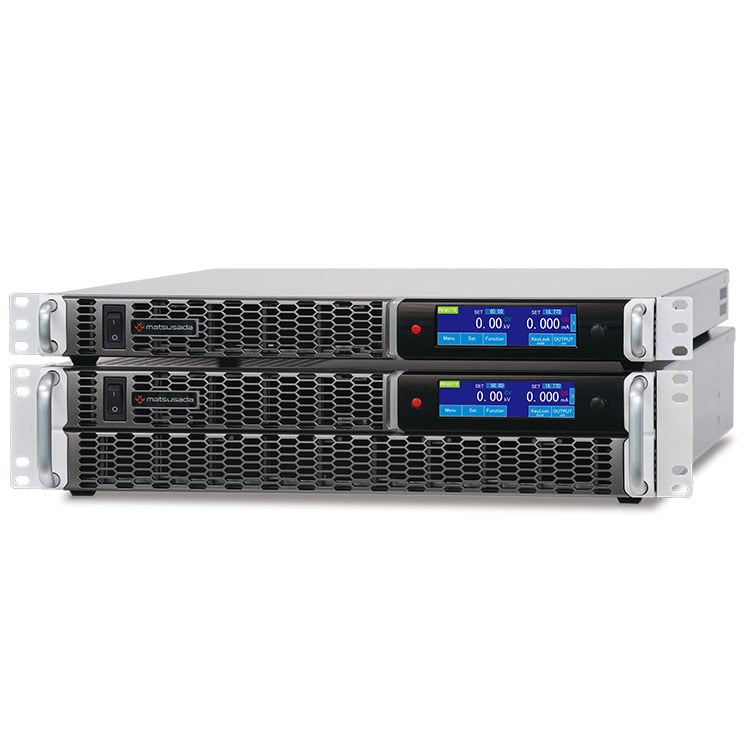
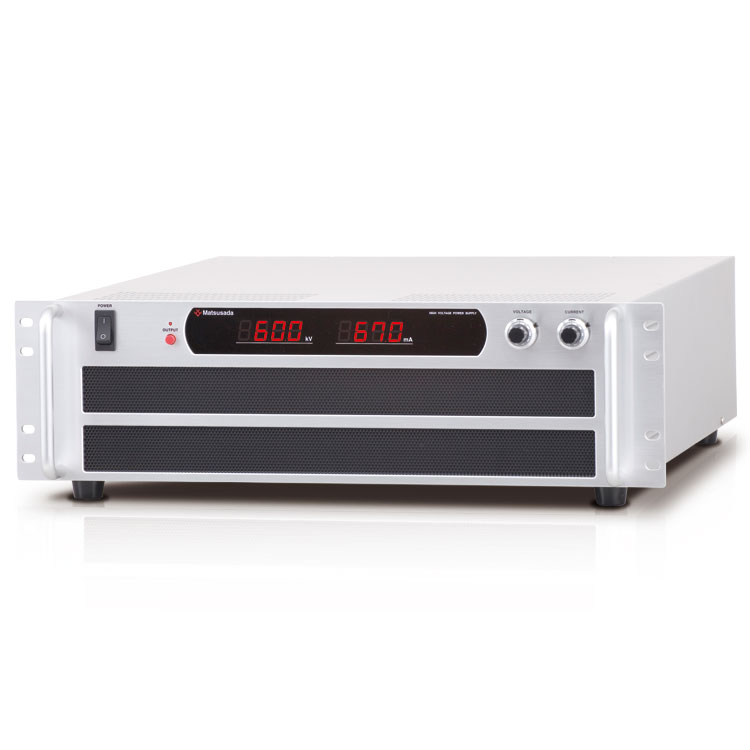
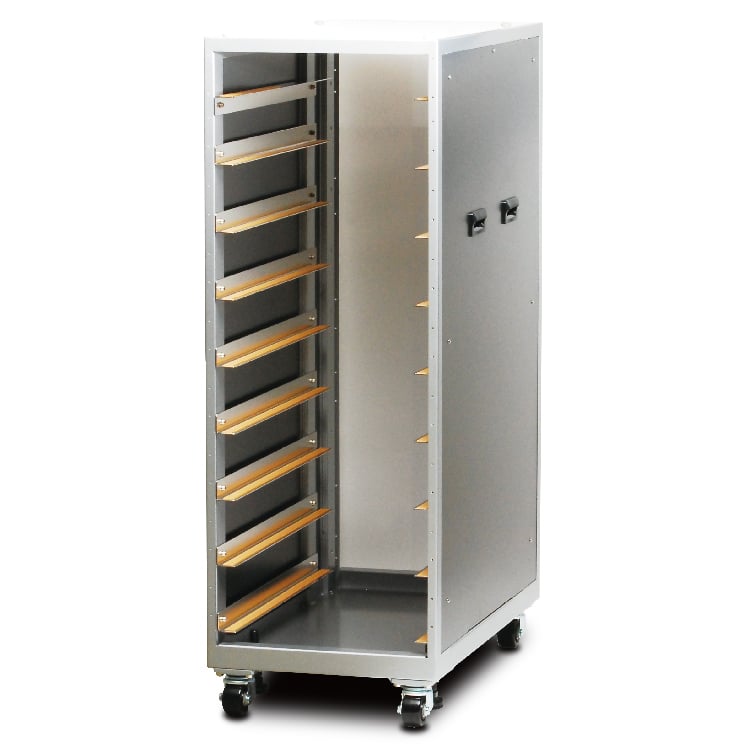
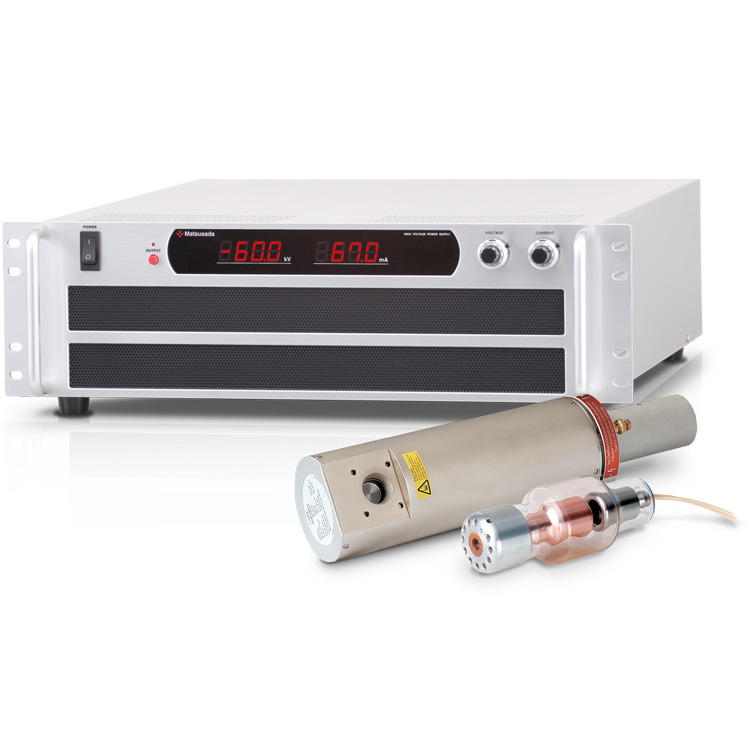
High-stability, low-ripple negative output X-ray power supply
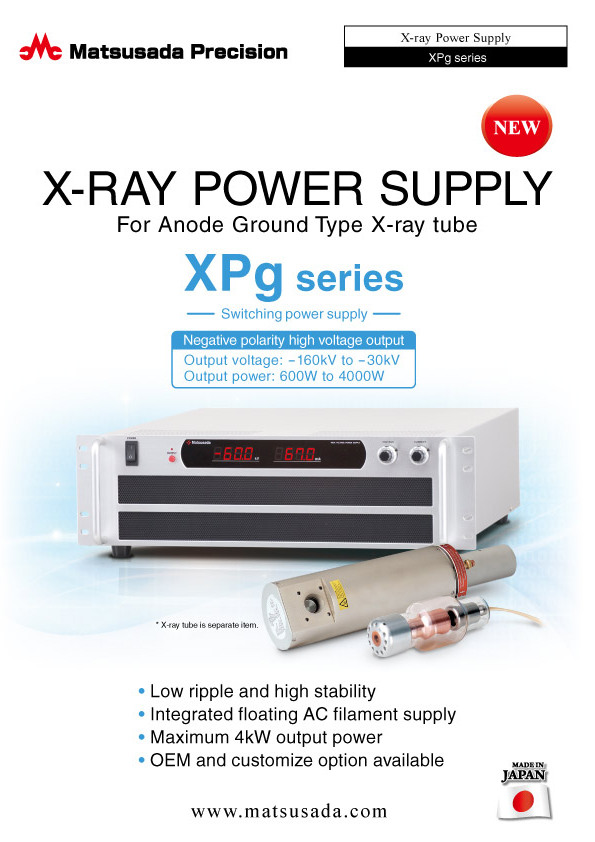
The XPg series is a high-stability, low-ripple negative output high-voltage power supply designed for X-ray applications. It features a built-in floating AC filament supply to ensure stable X-ray generation. Essential safety features, including a safety interlock, are incorporated to ensure safe and convenient operation. By combining the unit with the digital controller CO/USB series, control via LAN, USB, GPIB, RS-232C, and RS-485 is supported.
FEATURES AND BENEFITS
Designed for anode-grounded X-ray tubes
For X-ray Non-Destructive Testing (NDT) and X-Ray Diffraction (XRD)
Maximum output power: 4 kW
Integrated floating AC filament supply
Low ripple and high stability
Optical digital interface
Constant voltage and current operation with comprehensive protection
100 to 120 Vac, 50/60 Hz, Single-phase (option)
200 to 240 Vac, 50/60 Hz, Single-phase
200 to 220 Vac, 50/60 Hz, Three-phase
Output voltage control
[Local] 10-turn potentiometer on the front panel
[Analog remote] External control voltage 0 to 10 Vdc or external 5kΩ potentiometer
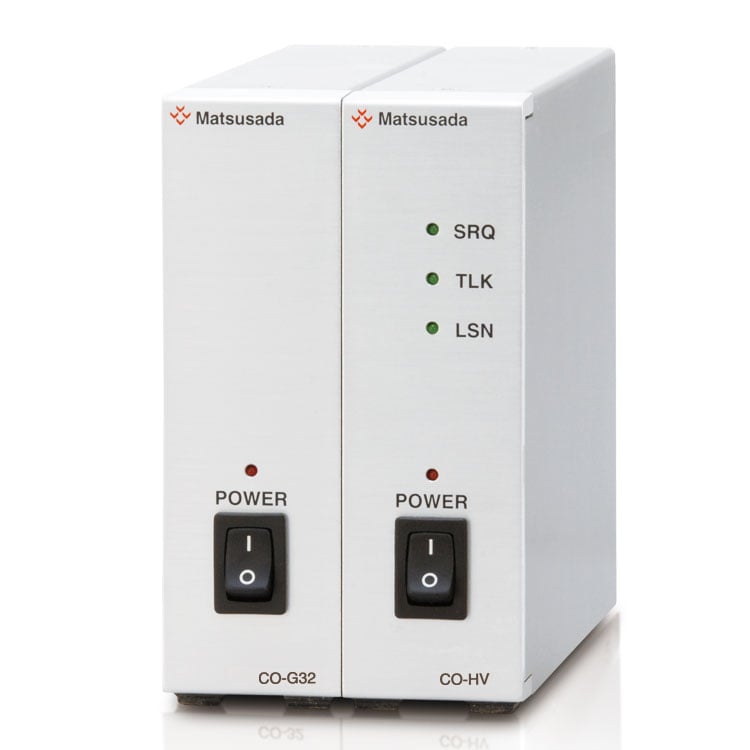
[Digital remote] Additional CO-HV adapter
Output current control
[Local] 10-turn potentiometer on the front panel
[Analog remote] External control voltage 0 to 10 Vdc or external 5kΩ potentiometer
[Digital remote] Additional CO-HV adapter
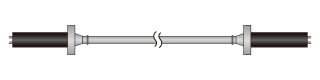
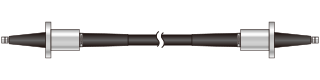
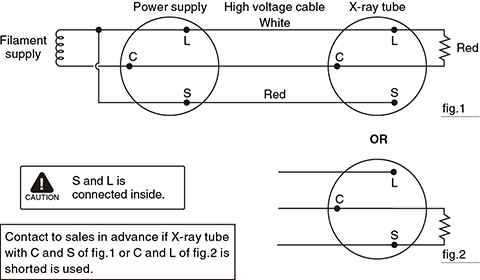
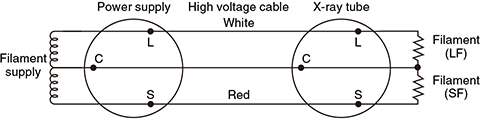
The diagram below shows the connection between the power supply and the X-ray tube.
Standard type
-LDf option (Dual filament) type
*Incorrect connections may cause failure or malfunction. Please ensure the filament connections match your X-ray tube specifications when placing an order.
Options
-LDf
Dual filament
Allows selection between large and small focal spots.
-LT1
Interlock remote reset, Output state auto-recovery prevention remote reset
(former: power failure prevention remote reset)
-L(100V)
100 Vac to 120 Vac single phase
(600 W model and 640 W model)
-L(200V1P)
200 Vac single phase
(3000 W model)
How to Order
When ordering, add Option No. in the following order by alphabet, and number to Model No. <Example> XPg-30N20-LDf, XPgR-60N50-LT1(200V1P)
Accessories
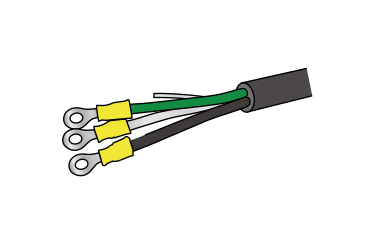
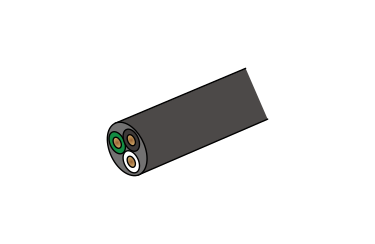
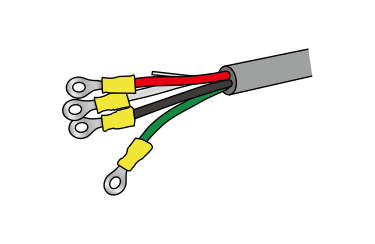
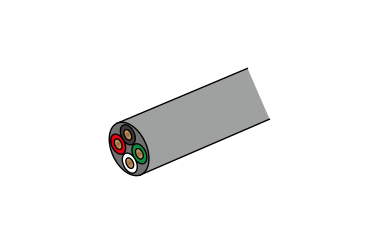
AC INPUT CABLE
Sold separately 1.2 kW or less model, 3000 W model -L(200V1P) option
CABLE TYPE5
Flying lead
300 Vac/25 A
2.5 meters
Sold separately 3000 W, 4000 W model
CABLE TYPE6
Flying lead
250 Vac/25 A
2.5 meters
Output Cable
Sold separately for 30 kV to 60 kV
CNF-75-3P(5)
(with Federal standard 75 kV 3-pin plug on both ends)
Optical isolation adapter/Digital adapter for analog power supplies
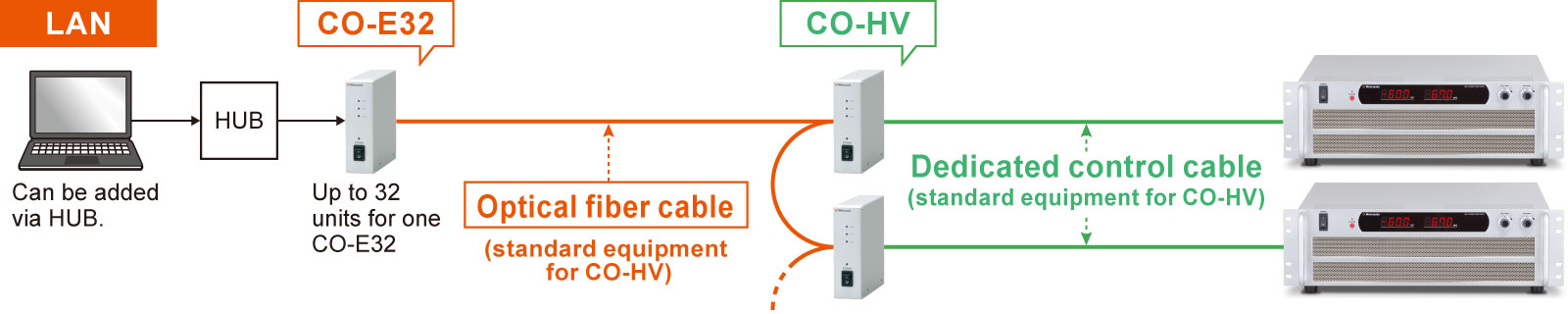
Optical isolation adapters use fiber optic cables for digital communication, enabling extremely reliable control even in noisy environments such as factories or over long distances. Because the connection is optically isolated, safe operation is ensured even in power supply configurations with potential differences.
Application: Control of high-voltage power supplies via LAN, USB, RS-232C, RS-485, or GPIB.
Connection: An adapter for each interface connects to the CO-HV unit using fiber optic cables. The CO-HV unit then connects to the XPg series via a dedicated control cable.
Number of unit: Up to 32 pairs of CO-HV units and power supplies can be connected. With GPIB, using address settings allows for a maximum of 448 units (14 addresses × 32 units).
Features: The communication system is well suited for such situations where there is a distance between the computer and the high voltage power supply or noisy environments. Also, it is especially ideal for use in combination with DC power supplies. The standard cable length is two meters, and it can be optionally extended up to 40 meters.
Optical isolation adapter
CO-E32:LAN adapter for optical communication
USB-OPT:USB adapter for optical communication
CO-OPT2-9/CO-OPT2-25:RS-232C adapter for optical communication
CO-OPT4-25:RS-485 adapter for optical communication
On this website, we provide only the latest versions of information and instruction manuals for our products. Therefore, the newest versions of manuals on the website may differ from those that came with products you purchased in the past.



 *Incorrect connections may cause failure or malfunction. Please ensure the filament connections match your X-ray tube specifications when placing an order.