


X-ray Diffraction (XRD) is an analytical technique used for material identification and crystal structure analysis. XRD is widely used in fields related to X-ray crystallography and materials science.
Since crystal structures differ depending on the material, the diffraction angles of X-rays are characteristic to each substance. By analyzing these unique diffraction patterns, XRD can be used for the identification of materials (determining what compounds are present), as well as crystal structure analysis, phase analysis, crystal orientation evaluation, crystallinity evaluation, crystallite size analysis, and residual stress analysis within the same compound.
XRD is widely used in various fields, including materials development, semiconductors, electronic materials, battery materials, metallic materials, pharmaceuticals, and mineral analysis.
Principle of X-ray Diffraction
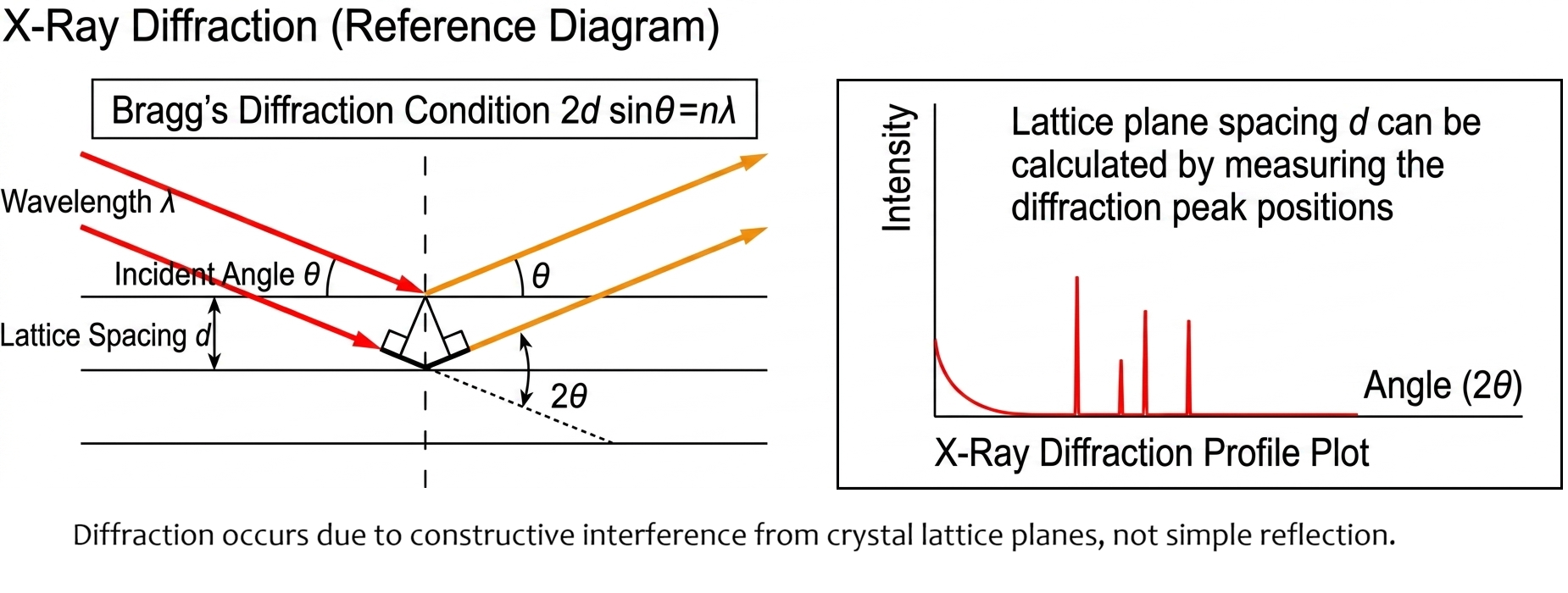
When X-rays are incident on a crystal lattice, diffraction occurs at specific angles. The diffraction angle depends on the spacing between crystal planes and is expressed by Bragg's Law.
nλ = 2d sinθ
λ: X-ray wavelength
d: Crystal plane spacing
θ: Diffraction angle
By measuring these diffraction peaks, the crystal structure unique to a material can be analyzed.
In laboratory XRD systems, Cu-Kα radiation generated using a copper (Cu) target is widely used, with a wavelength of approximately 1.54 Å. Depending on the application, Co, Mo, and Cr targets may also be used.
What Can Be Determined with XRD
- Phase Identification
- Determines which substances are contained in an unknown sample.
- Crystal Structure Analysis
- Analyzes crystal systems and lattice constants.
- Preferred Orientation Evaluation
- Evaluates crystal orientation in thin films and crystalline materials.
- Crystallinity Evaluation
- Evaluates the degree of crystallinity and amorphous content.
- Crystallite Size Evaluation
- Crystallite size can be estimated from diffraction peak broadening using methods such as Scherrer analysis.
- Residual Stress Analysis
- Internal stress in materials can be analyzed from diffraction peak shifts.
- Crystal Defect and Strain Evaluation
- By analyzing the full width at half maximum (FWHM) of diffraction peaks, crystallinity, crystal strain, and structural inhomogeneity can be evaluated.
- Trace Component Detection
- High-power and stable X-ray irradiation enables measurements with high signal-to-noise (S/N) ratios by suppressing background noise, improving the identification accuracy of trace phases.
Powder X-ray Diffraction (Powder XRD)
Powder X-ray Diffraction (Powder XRD) is one of the most common XRD measurement techniques performed on powdered samples.
Because powder samples contain randomly oriented crystallites, diffraction from many crystal planes can be obtained simultaneously. This makes the method highly suitable for material identification and phase analysis. In combination with Rietveld refinement, quantitative analysis and lattice constant analysis are also possible.
In general powder XRD systems, the "θ-2θ method" (Bragg-Brentano geometry), in which the X-ray source and detector rotate symmetrically around the sample, is widely used.
In this method, highly accurate diffraction patterns are obtained by synchronously scanning the incident angle θ and the diffraction angle 2θ.
In Rietveld refinement, the entire measured diffraction pattern is fitted with theoretical calculations, enabling highly accurate analysis of crystal structures, lattice constants, and phase composition ratios.
Main Applications
Mineral analysis, ceramics analysis, battery material analysis, catalyst material analysis, pharmaceutical crystal evaluation, and semiconductor material evaluation.
XRD Stress Analysis
X-ray diffraction is also used for residual stress measurement inside materials.
When stress is applied to a crystal, the spacing between crystal planes changes, causing shifts in diffraction peak positions. By analyzing these peak shifts, residual stress can be measured non-destructively.
Main Applications
Automotive components, aerospace components, welded parts, heat-treated materials, shot peening evaluation, and semiconductor packages.
Because stress analysis measures extremely small peak shifts, X-ray output stability is critical. Long-term stability, ultra-low ripple, and highly stable tube current control are required.
Thin Film XRD
Thin Film XRD is an XRD technique used for evaluating thin films in semiconductors, electronic materials, and related applications.
For thin-film samples that are difficult to measure using conventional XRD, low-angle incidence methods such as Grazing Incidence X-ray Diffraction (GIXRD) are used to analyze regions near the film surface.
In GIXRD, which is capable of analyzing films only a few nanometers thick, background noise reduction greatly affects measurement accuracy.
Technical Point: Since diffraction intensity becomes extremely weak in thin-film measurements, minimizing power-supply-induced noise is essential for detecting fine diffraction peaks.
Main Applications
Semiconductors, MEMS, LEDs, solar cells, magnetic thin films, and piezoelectric materials.
In-situ XRD/Operando XRD
XRD is also used for in-situ measurements that observe state changes in real time during heating, cooling, charging/discharging, and other processes.
In recent years, its importance has increased particularly in all-solid-state batteries, Li-ion batteries, hydrogen-related materials, and catalysts.
Amorphous Materials and XRD
Although XRD is highly effective for crystal structure analysis, amorphous materials such as glass and non-crystalline materials without long-range order do not produce clear diffraction peaks.
As a result, analyzing amorphous states is generally more challenging and may require specialized instruments or techniques, such as halo pattern analysis.
Components of an XRD System
- X-ray Source
- Generates X-rays using an X-ray tube.
- High Voltage Power Supply
- Supplies high voltage to the X-ray tube and accelerates electrons.
- Filament Power Supply
- Heats the filament for thermionic electron emission.
- Detector
- Detects diffracted X-rays. In recent years, scintillation detectors, semiconductor detectors, one-dimensional (1D) detectors, and two-dimensional (2D) detectors have been increasingly adopted, enabling high-speed and high-sensitivity measurements.
- Goniometer
- Controls the angles of the sample and detector.
Performance Requirements for XRD Power Supplies
In XRD systems, the stability of diffraction peak positions and peak intensities directly affects measurement accuracy. Particularly in high-resolution XRD and stress analysis, power supply noise and drift can become major sources of measurement error. Therefore, high-voltage power supplies for X-ray sources are required to provide: "Ultra-low ripple", "Long-term stability", "High-precision tube current control", "Low noise", "Fast response", "High reproducibility", "In quantitative analysis", where peak intensity reproducibility is critical, tube current stability has a significant impact on measurement repeatability.
Power Supply Performance Supporting XRD Accuracy
In high-resolution XRD measurements and precise Rietveld refinement, fluctuations in X-ray output directly lead to reduced peak resolution and analytical errors.
Support for Monochromators:
When monochromators are used to isolate specific wavelengths, unstable X-ray intensity causes fluctuations in detector count rates, significantly reducing measurement efficiency.
Long-Term Stability and Aging Control:
For continuous in-situ measurements and X-ray tube aging processes that affect tube lifetime, highly precise voltage ramp control and drift-free stable output are essential.
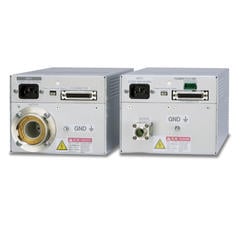
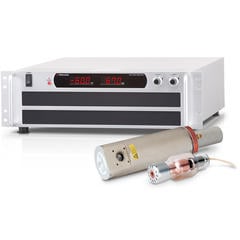
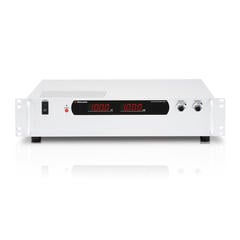
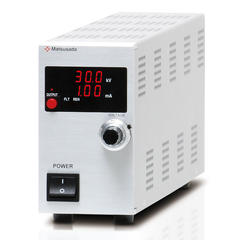
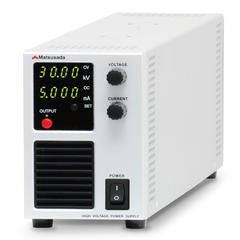
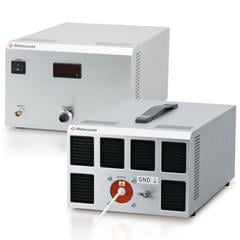
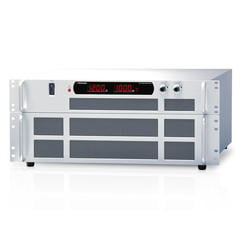
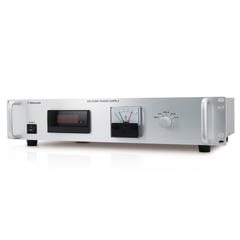
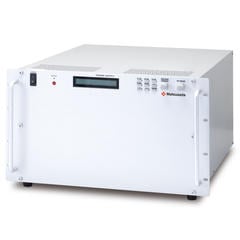
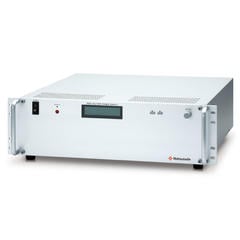
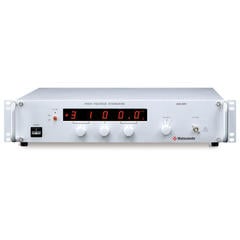
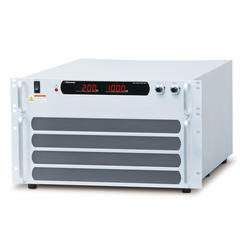
Matsusada Precision offers a wide lineup of ultra-low ripple, highly stable high-voltage power supplies and X-ray tube power supplies designed to meet the demanding requirements of analytical instruments such as XRD systems.
- X-ray Diffraction (XRD)
- X-ray Crystallography
- Bragg's Law
- Crystal Orientation
- Lattice Plane Spacing
- Preferred Orientation
- Chemical Bonding
- Inorganic Compounds
- Amorphous Materials
- Residual Stress Analysis
- X-ray Source
- High Voltage Power Supply
Recommended products
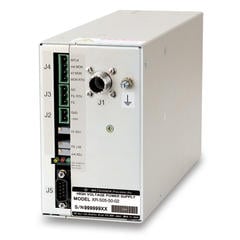
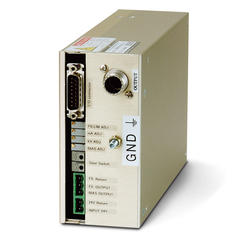
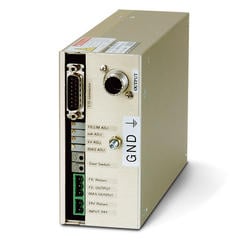
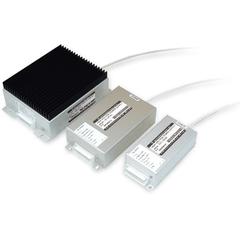
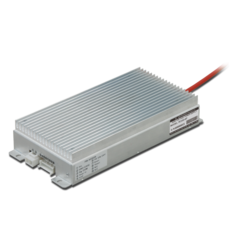
Matsusada Precision develops and manufactures X-ray tube power supplies for generating X-rays used in X-ray crystallographic analysis.
A wide range of products is available to match analytical instrument requirements, including:

Related Technical Articles
- What are X-rays? (Basic Knowledge)
- What is the difference between Radioactivity, Radiation, and Radioactive Materials?
- Understanding Radiation: Effects on the Body and X-ray Safety
- Types of X-ray Tubes and High-voltage Power Supplies
- Safety and Usage of High Voltage Power Supply
- HVPS for Lab Analyzers: Key Considerations for Stability and Noise
- High Voltage Measurement Method