



1. Example applications
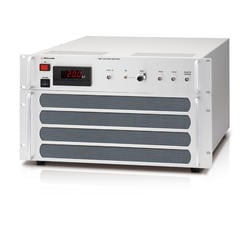
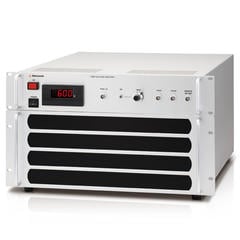
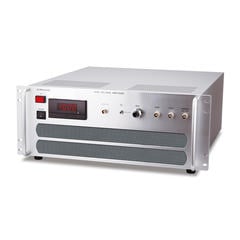
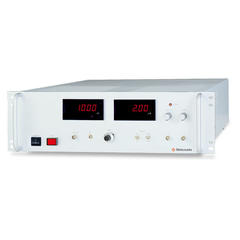
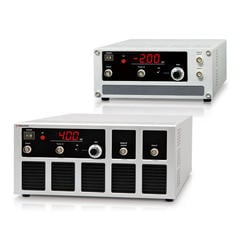
Matsusada Precision high voltage amplifiers are utilized in a variety of applications as follows:
1.1 Electric appliances
Development and testing of inverters and converters
The automotive industry is shifting from 12V to 48V systems, particularly for mild-hybrid vehicles. This trend necessitates the redevelopment of various components. There is also increasing demand for bidirectional devices (DC-DC converters) to improve regenerative power storage and energy efficiency. Furthermore, the proliferation of in-vehicle computers has led to a rapid increase in noise testing requirements, including cranking waveform simulation.
Bipolar power supplies are ideal for noise testing, thermal testing, and transient response testing of these devices. Since BEVs and HEVs require high-voltage testing, Matsusada Precision offers a comprehensive lineup of bipolar power supplies designed to meet these demanding requirements.
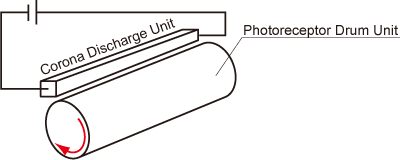
Uniform charging of the photosensitive drum (HCOR)
The drum is charged by corona discharge. The drum current at this time can be accurately controlled.
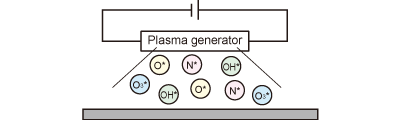
Plasma generation under atmospheric pressure
High-voltage corona discharges can generate plasma even under atmospheric pressure. It is best suited as a voltage source at this time.
Applying high voltage to electrical materials
When executing transient response tests, where they precisely modulate voltage to assess how electrical materials react to quick changes in power levels. They are pivotal in physics experiments, enabling the exploration of fundamental electrical properties under high-voltage conditions.
In the field of dielectrics & ceramics, these amplifiers play a critical role by facilitating the application of high voltages to study dielectric breakdown and charge storage capabilities.
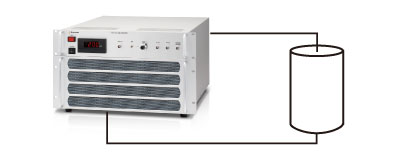
Similarly, they are instrumental in flash sintering processes, providing the controlled high voltage necessary to initiate and sustain the sintering of ceramic materials within seconds.
Furthermore, high voltage amplifiers are employed in photocatalytic material testing, where high voltage aids in simulating the effects of solar energy on photocatalytic materials, essential for the development of new solar energy applications and environmental remediation processes.
Recommended products
1.2 Automobiles and Vehicles
Development and testing of inverters and converters
In recent years, the supply voltage for automotive equipment has been changing from 12V to 48V. This trend toward higher voltages, particularly for mild-hybrid systems, is driving the need to redevelop various components. Other areas of increasing demand include the development of bidirectional devices (DC/DC, etc.) to improve technology for storing regenerative power from the perspective of energy conservation, etc., and noise testing (including cranking waveforms, etc.) of in-vehicle electrical components, which has increased rapidly due to the increasing use of computers in vehicles.
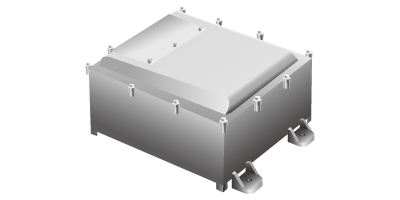
Bipolar power supplies are very suitable for noise testing, thermal testing, transient response testing, etc. of these devices. In addition, BEVs and HEVs need to be tested at high voltages. Matsusada Precision's bipolar power supplies boast a range of products that can meet these requirements.
Development and testing of magnetic materials for motors
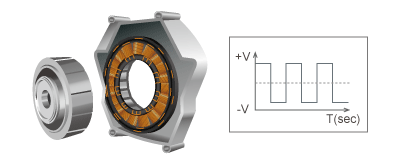
Bipolar power supplies are also used to measure the hysteresis characteristics of magnetic materials. This is because it has a significant impact on efficiency when developing motors for EVs and other applications. To measure smoother and more accurate hysteresis characteristics, a fast bipolar power supply is required.
Development of current sensor and shunt resistor
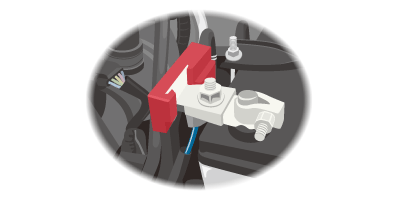
As automobiles and special-purpose vehicles increasingly become HEVs and EVs, current monitoring technology is becoming increasingly important. To increase range and operating time, it is necessary to eliminate wasted current. Therefore, it is essential to improve the capability of current sensors to monitor the current from the battery to various devices accurately. Bipolar power supplies are suitable for evaluating current sensors' accuracy, response time, and temperature.
Development and evaluation of motors and peripheral equipment
When a motor is evaluated using a general variable power supply, the power supply can be damaged by back EMF depending on the evaluation details. Therefore, until now, motors have been developed and evaluated using a combination of electronic loads and variable power supplies. A bipolar power supply can provide four-quadrant output, so there is no need to combine electronic loads.
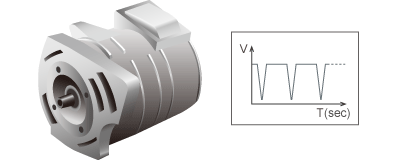
However, due to the lack of a high-power bipolar power supply, only motors with low power ratings could be tested.
Matsusada Precision has developed a compact, high-power bipolar power supply that can test even the most powerful motors.
Recommended products
1.3 Piezo drivers
High-voltage piezo drivers and amplifiers provide stable control for piezoelectric actuators. Since piezo elements are capacitive loads, driving them optimally requires an amplifier capable of sinking current (absorbing electrical power), unlike standard programmable DC power supplies. High-speed positioning requires not only fast response times but also sufficient output current. Conversely, maintaining a static position requires compensating only for minimal leakage current, resulting in low power consumption.
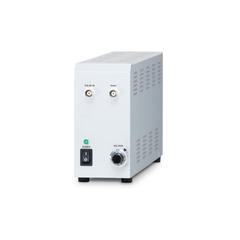
Benchtop type
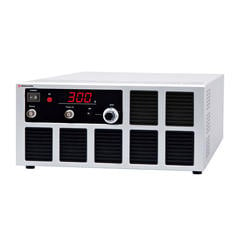
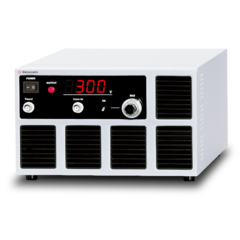
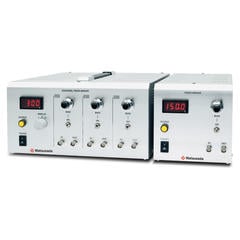
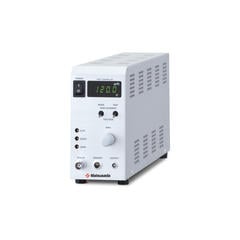
Matsusada Precision's benchtop high-voltage piezo amplifiers are engineered for precise control of piezo actuators with maximum outputs up to ±300V. They deliver robust current capabilities, supporting continuous output up to 0.75A and peak output up to 2.0A. This ensures rapid response across a broad frequency range. These amplifiers are suitable for both open-loop and closed-loop control, meeting the dynamic needs of piezo-driven applications.
Recommended products
Module type
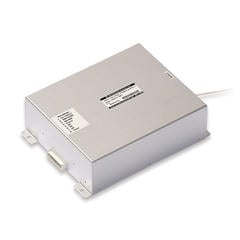
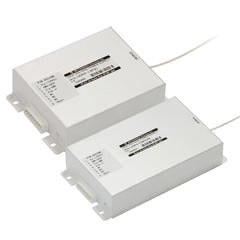
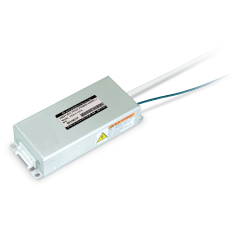
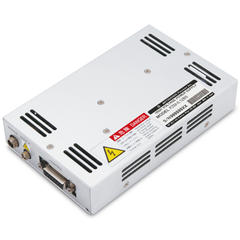
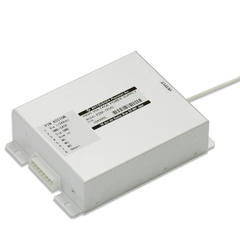
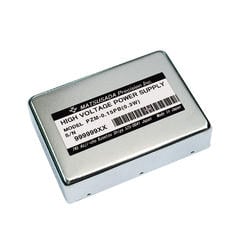
Matsusada Precision's module type high voltage piezo amplifiers offer a compact and flexible solution for precision driving of piezo elements. These amplifiers provide output voltages up to +1kV and currents up to 100mA, suitable for various load conditions. Their rapid response capabilities, reaching up to 20kHz for resistive loads and up to 300Hz for capacitive loads, make them ideal for applications requiring fast and accurate piezo actuation.
Recommended products
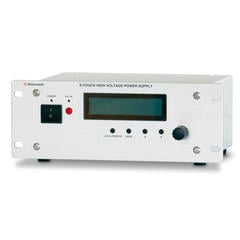
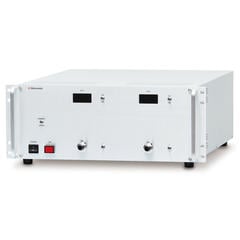
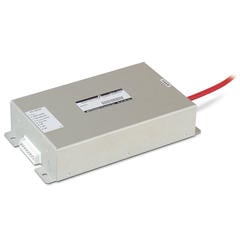
1.4 Electrostatic chuck (E-Chuck)
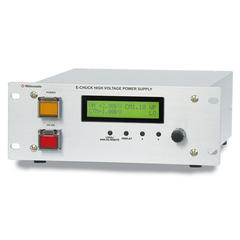
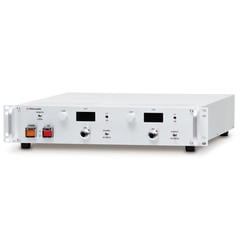
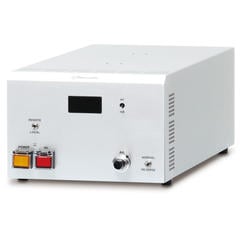
Matsusada Precision offers a comprehensive lineup of High Voltage Power Supplies for Electrostatic Chuck (E-Chuck) applications. Designed based on extensive customer feedback from the semiconductor, OEM, and R&D sectors, these units ensure smooth and reliable chucking and wafer release. With over 35 years of experience in high-voltage technology, we provide highly reliable E-Chuck power supplies featuring a wide range of outputs and optional features to meet diverse productivity requirements.
Bipolar output
Our bipolar output electrostatic chuck power supplies enable seamless transitions from negative to positive voltage with reversible polarity configurations. Models range from ±500V to ±7.5kV with power outputs between 4W and 10W. For more demanding applications, options up to ±10kV with power ratings of 6W, 10W, and 30W are available.
Reverse output
Matsusada Precision's reverse output type Electrostatic Chuck Power Supplies feature switchable outputs that range from 0V up to their rated voltage, providing reversible polarity for versatile chucking applications. These supplies offer a variety of output configurations, with voltages spanning from ±500V to ±10kV and power levels between 2W and 200W.
2. Points to Consider When Selecting a High Voltage Amplifier
Selecting the right high-voltage amplifier requires evaluating key technical parameters. Understanding the relationship between slew rate, output voltage, output power, and load characteristics is crucial. Proper selection ensures signal fidelity and efficient operation.
2.1 Slew Rate: Ensuring Signal Fidelity
The slew rate represents the maximum speed at which an amplifier can change its output voltage, measured in volts per microsecond (V/µs).
Why is it critical?
- Prevents Distortion: For high-speed signals, a sufficient slew rate is required for the output waveform to accurately track the input. An insufficient slew rate results in signal distortion.
- Essential for High Frequencies: Applications involving fast transients or capacitive loads (like piezo elements) demand high slew rates. Our AMPS series offers an ultra-high slew rate of 1200 V/µs to meet these challenges.
Key takeaway: Ensure the amplifier's slew rate exceeds the maximum rate of change required by your signal and load.
2.2 Output Voltage
The output voltage range must match the requirements of your application. Beyond the basic voltage magnitude, consider whether your application requires a unipolar (0 to +V) or bipolar (±V) output. For capacitive or inductive loads, a four-quadrant output capable of sinking current is often necessary to discharge the load energy quickly and maintain waveform fidelity.
2.3 Output Current and Power
Ensure the amplifier can deliver sufficient peak current to drive your load, especially at high frequencies. For capacitive loads, the current required is proportional to the rate of voltage change ($I = C \cdot dV/dt$). An amplifier with insufficient current capacity will cause the output waveform to clip or distort (slew rate limiting), even if the voltage rating is sufficient. Choosing a model with adequate power headroom ensures reliability and cleaner signal performance.
2.4 Capacitive Load Stability
Driving capacitive loads can introduce phase shifts that affect amplifier stability. It is critical to confirm that the amplifier is stable with your specific load capacitance. Some high-speed amplifiers may oscillate if the capacitive load is too large. Checking the amplifier's frequency response and phase margin specifications with the intended load is essential for stable operation.
2.5 Input Impedance
High input impedance is a critical feature for voltage amplifiers.
Why is it critical?
- Prevents Source Loading: High input impedance minimizes current draw from the signal source, preserving the integrity of the input signal.
- Ensures Accuracy: Low input impedance can load down the source, causing voltage drops and measurement errors. High impedance ensures the amplifier amplifies the true source voltage.
3. FAQs
3.1 What is the difference between a power amplifier and a voltage amplifier?
A voltage amplifier is designed to increase a lower input voltage to a higher output voltage by a factor known as gain. For example, a voltage amplifier with a gain of 50 can amplify a 12 V input signal to a 600 V output signal. A power amplifier, on the other hand, amplifies both voltage and current to increase the overall output *power* (measured in watts) delivered to a load.
Both amplifier types rely on transistors, but with different characteristics and circuit configurations. Voltage amplifiers typically have a very high input impedance and a low output impedance. The high input impedance is essential so they draw minimal current from the input source, ensuring signal accuracy (see section 2.5). In contrast, power amplifiers often have a lower input impedance and are designed to efficiently transfer power to a low impedance load.
3.2 What is the difference between high voltage and high amperage?
High voltage is when there is a much higher potential for electric charge to flow because the voltage, i.e., a potential difference, is high. High amperage is when a higher number of electrons/more electric charge moves through a conductor. We can compare it to a pipe connected to a water tank. If the tank is placed in a higher position, the water will start flowing through the pipe at a faster pace (high voltage). Similarly, if we increase the size of the pipe without raising the tank's height, more water will start flowing through the pipe (high amperage).
Both high voltage and high amperage have different use cases. Apart from power transmission, high voltage is also useful in inverter/converter development and testing, as well as magnetic field generators. High amperage is useful in certain use cases, including amplifiers, but since it comes with challenges like overheating, the costs of such components/devices may be higher.