


Faraday Cups: From Basics to Measurement Set-ups
What Is a Faraday Cup?
A Faraday cup is a cylindrical conductor that collects charged particles from outside onto the internal conductor surface and measures a current proportional to the number of particles.
Similar to a Faraday cage, a Faraday cup operates based on the principle that no electric field exists inside a conductive enclosure. Its interior remains shielded from external electric fields, ensuring high resistance to noise and enabling the accurate detection of minute charge fluctuations.
Faraday cups utilize this property and are commonly employed in various advanced technologies that deal with microscopic charges, such as mass spectrometry, ion beam measurement systems, and powder charge analysis.
Principle and Structure
The principle of the Faraday cup is straightforward: it captures the charge carried by incident particles using a conductive cup-shaped collector and measures it as an electric current.
When a beam of charged particles travels through a vacuum or an analogous environment and enters the Faraday cup, these particles are absorbed by the internal surface of the device. During this process, the charge of the particles is transferred to the conductor, and this transfer, corresponding to current flow, can be quantified. This current, measured in amperes (coulombs per second), is directly proportional to the number of charged particles arriving per unit of time.
The primary role of the Faraday cup is to physically trap charged particles and accurately measure their current. The system generally includes a suppression electrode to mitigate secondary electron emission, in addition to the conductive cup itself. It is also paired with an electrometer that can precisely detect tiny currents.
Installation Environment and Peripheral Circuits
To ensure high-precision measurement of electron or ion beam currents, the Faraday cup must be installed within a vacuum chamber. This prevents the beam from scattering due to collision with air molecules and eliminates interference from humidity and airborne particles, ensuring stable and accurate charge measurement. This setup ensures stable beam charge measurement, free from external disturbances.
The peripheral setup typically includes a suppression electrode, an electrometer, and a low-noise bias power supply. The suppression electrode, which requires a stable negative voltage, mitigates the effects of secondary electron emission, improving measurement stability and accuracy. The electrometer is a highly sensitive ammeter capable of measuring the very low currents (down to sub-nanoampere levels) collected by the Faraday cup.
A stable, low-noise power supply is used to apply a bias voltage to the suppression electrode (typically in the range of -50 V to -300 V). While a high-voltage power supply (which can be up to several tens of kilovolts) is used to accelerate the ion or electron beam itself, the power supply for the suppressor is a low-voltage component focused on stability and low noise to ensure measurement precision.
By ensuring suitable vacuum environments and dependable peripheral circuits, the high-precision measurement capabilities of the Faraday cup can be maximized.
Example of a Measurement System Using a Faraday Cup
A measurement system that employs a Faraday cup is designed to accurately measure the ion beam current, which corresponds to the number of charged particles. It generally includes an ion source, an acceleration power supply, a beam transport system, a Faraday cup equipped with a suppression electrode, and an electrometer.
The current measurement procedure for this system follows these steps:
-
Transport the ion beam to the Faraday cup.
Initiate the ion source to produce ions and accelerate them to the desired energy levels with the acceleration power supply. The ions are then directed to the center of the Faraday cup via controlled beam transport, utilizing electromagnetic lenses and steering magnets.
-
Apply a negative bias voltage to the suppression electrode to suppress secondary electron emission.
When the beam reaches the Faraday cup, the conductive surface inside collects the charged particles, producing a current. To prevent secondary electrons--generated during the impact--from escaping the cup and causing measurement errors, a negative bias voltage (typically -50 V to -300 V) is applied to the suppression electrode. This voltage field repels the negatively charged secondary electrons, forcing them back toward the collector.
-
Measure the current collected in the Faraday cup.
Use an electrometer to measure the charge collected in the Faraday cup, then record and use this data to evaluate equipment performance and optimize beam control.
These measurement systems are reliable methods for accurately characterizing ion beam properties and are widely used in R&D laboratories and accelerator operation facilities.
Advantages
Faraday cups enable the direct measurement of incident charged particles as a current. By capturing all incident particles, Faraday cups ensure that the measured current accurately reflects the beam's intensity.
Furthermore, Faraday cups display a linear response over a wide range of beam currents, ensuring precise measurements from weak to strong signals. This linear behavior enhances measurement consistency and improves the reliability of equipment control and physical analysis based on the collected data.
Another key feature of Faraday cups is their fast response time. They can quickly respond to rapidly changing beams and short-pulse signals, allowing high temporal resolution measurements and real-time beam monitoring.
Due to these features, Faraday cups are regarded as reliable, high-performance sensors for measuring electron and ion beam currents. They are used in a wide range of applications, from advanced R&D to industrial process control.
Main Applications
Faraday cups are used in various fields due to their ability to measure currents with high precision. Common applications include mass spectrometry, electron and ion beam monitoring, and powder charge measurement.
Mass Spectrometry: Faraday cups, installed inside vacuum chambers, precisely measure minimal currents from a few picoamperes to tens of nanoamperes. Their high sensitivity and linear response make them ideal for environments needing accurate charge detection under vacuum. This enables the reliable measurement of tiny charged particle fluxes, facilitating precise analysis of target mass and chemical composition.
Electron and Ion Beam Monitoring: These systems, typically used in vacuum environments, offer wider measurement ranges, ranging from a few nanoamperes to hundreds of microamperes, and sometimes reaching milliampere levels. They monitor beam intensity and behavior in real time, which is crucial for maintaining and controlling the performance of accelerators and analytical instruments.
Powder Charge Measurement: Typically employed in atmospheric conditions, these systems effectively detect currents ranging from several tens of picoamperes to several nanoamperes caused by charged microparticles or powders. In manufacturing and quality control, precisely characterizing the electrostatic states of powders directly enhances product quality and helps prevent issues.
By adapting to various environments and measurement ranges, Faraday cups enhance their performance, enabling high-precision electrostatic measurements suitable for a wide range of industrial and research uses.
Matsusada Precision's High-Voltage Power Supplies Supporting Faraday Cups
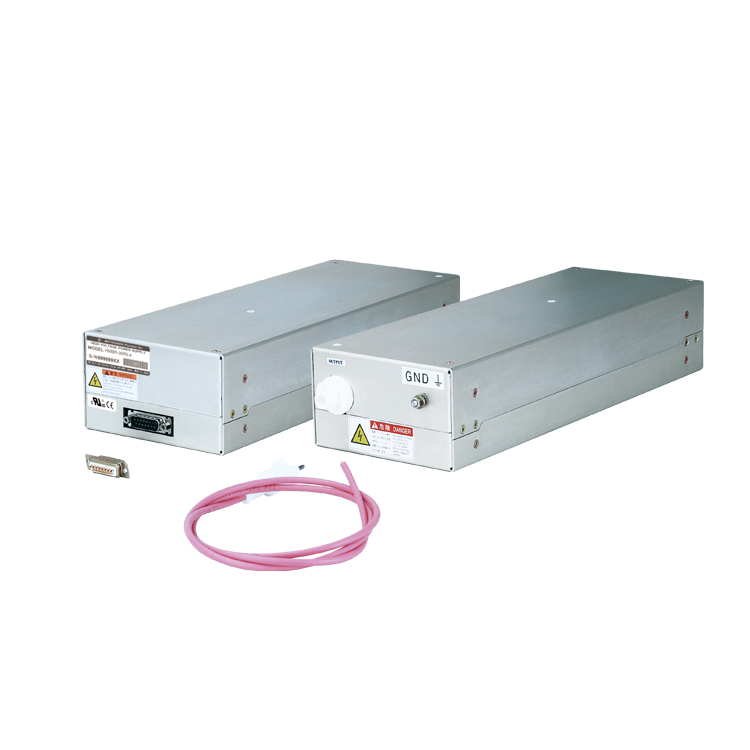
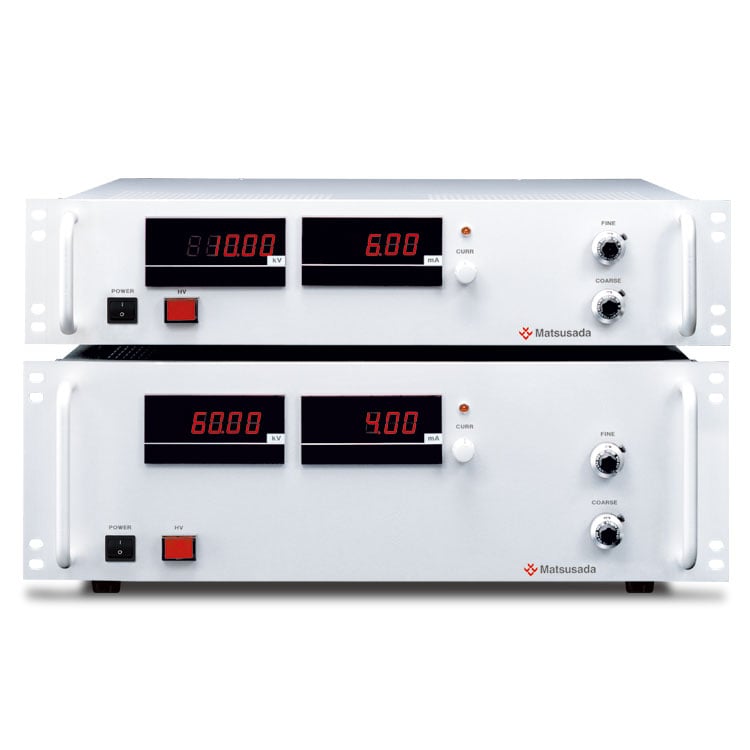
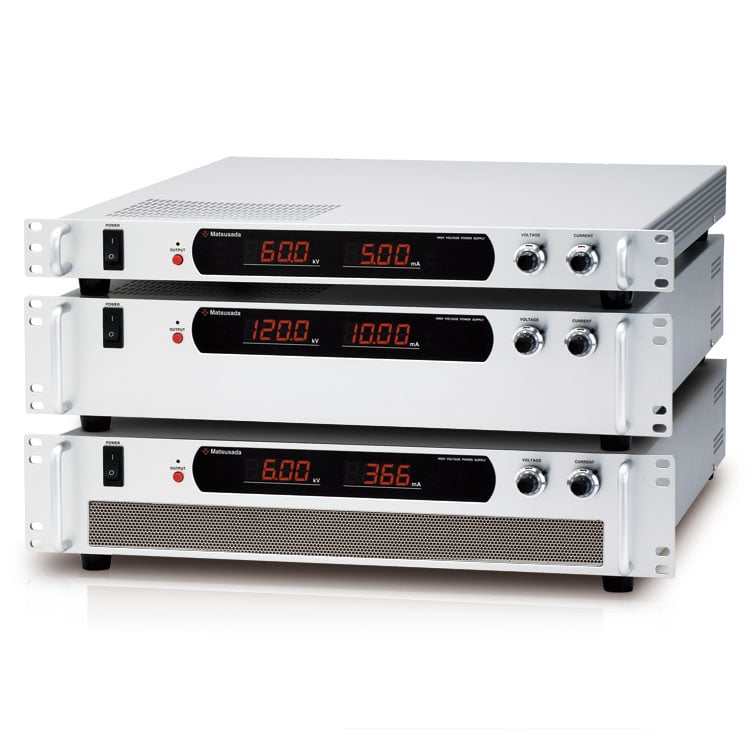
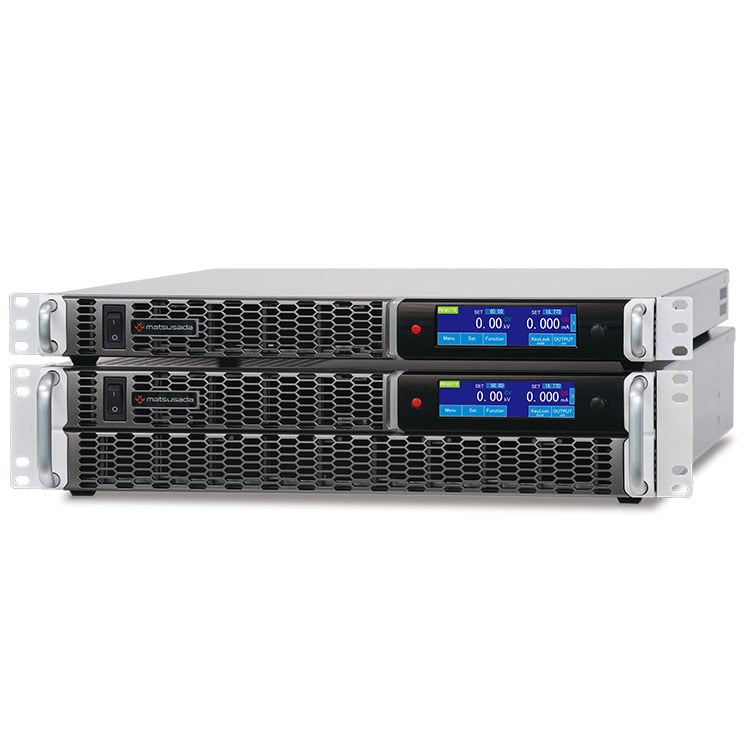
Matsusada Precision's high-voltage power supplies are the trusted choice for static electricity measurement and electron beam control, particularly in applications involving Faraday cages and cups. Several series are tailored to meet specific needs.
For Microcurrent Beam Measurement
- Applications:
For Picoampere Analysis and Electrostatic Testing
- Applications:
-
- Electron microscopes
- Electron beams
- Dielectric strength testing
- Reference power supplies
- X-ray equipment
- Lithography
- Electrostatic discharge testing
- Electronic component evaluation testing
- Electron guns
- SEM
- MS
- Ion beams
- Various high-voltage testing applications
For General-Purpose Electrostatic Measurement and Fixture Bias
- Applications:
-
- Inverter testing and evaluation
- Ion beams
- Dielectric strength testing
- Electron beams
- Electronic component aging
- Various high-voltage experiments
- Electrospinning
- X-ray equipment
- Ion implantation systems
- Automatic test equipment
- Capacitor charging
- Dielectric barrier discharge
- Power device reverse voltage testing.
- Applications:
-
- Power device leakage current measurement
- Switching characteristic testing
- Inverter evaluation testing
- Capacitor charging
- Dielectric strength testing
- Electron beams
- Ion beams
- X-ray equipment
- Electrospinning
- Related Terms:
-
- Faraday
- Charged Particle
- Ion Beam
- Secondary Electron
- Mass Spectrometry
- Electrometer