
An engineering guide to choosing the right high-voltage power supply by application
Selecting a power supply for an X-ray tube starts with clarifying the system's purpose and then choosing the appropriate tube. X-ray tubes come in many varieties-different models are used for XRF analyzers, XRD diffractometers, CT scanners, and food-inspection devices, and each application has distinct performance requirements.
Required tube voltage, tube current, output stability, tube construction and grounding mode have a direct impact on sensitivity, resolution, cycle time, and long-term reliability.
This article explains the selection points for four major applications (XRF, XRD, CT/NDT, and food inspection) in a clear, application-focused manner.
Recommended X-ray Tube and Power-Supply Requirements by Application
| Application | Typical Tube Type | Tube Grounding | Typical Voltage |
Power Range |
Key Characteristics | Recommended Power Supply |
|---|---|---|---|---|---|---|
| XRF-EDX (EDXRF) | Sealed tube, end-window tube, mini-focus tube | Cathode grounded | 20-60 kV | 30-100 W | Low ripple, stability, reproducibility | XR, XRR, XRT |
| XRF-WDX (WDXRF) | Sealed tube, end-window tube, water-cooled tube | Cathode grounded | 20-60 kV | 1-4 kW | Stability, low ripple, reproducibility | XKg |
| XRD | Glass diffraction tube, ceramic diffraction tube | Anode grounded | 20-60 kV | 1-4 kW | Ultra-low ripple, long-term stability | XPg |
| CT/NDT | Micro-focus tube, open-tube | Both options available | 80-160 kV | 50 W-4 kW | Microscopic focus, focus stability | XPg, XKg, OEM |
| Food Inspection | Glass tube, long-life sealed tube | Primarily anode grounded | 40-120 kV | 300 W-2 kW | Throughput, long life | XPg, XKg, OEM |
For more details about X-ray tube types and recommended power supplies, see the technical column
"X-ray Tube Types and Power Supplies".
Additional X-ray application examples are listed in the
X-ray Power-Supply Application Index.
XRF Systems - Low Noise and Intensity Reproducibility Are Paramount
In X-ray fluorescence (XRF) analysis, maintaining exceptionally high time stability of X-ray intensity is paramount. Even minute high-voltage fluctuations can directly alter fluorescence intensity, increasing measurement variance and reducing analytical precision. In EDXRF, a single measurement typically lasts from a few seconds to about 5 minutes, while WDXRF qualitative analysis may require several tens of minutes. When analyzing elements at ppm levels, even extremely small voltage drift can affect fluorescence output. Therefore, not only long-term stability but also excellent measurement-to-measurement reproducibility is essential. In addition, because highly sensitive detectors are used, a low-noise high-voltage power supply is a critical selection criterion.
- Maintaining a low Limit of Detection (LOD)
- Reproducible film-thickness measurement
- Reduced calibration drift
- Suppressed inter-measurement variance
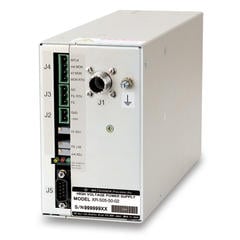
For benchtop XRF analyzers, film-thickness meters, and OEM solutions, the XR, XRR and XRT series are ideal because they incorporate filament power supplies and feature compact designs. For handheld XRF units and other ultra-compact configurations, please contact us for a custom solution.
XRD Systems - Ultra-Low Ripple and Long-Term Drift Performance
In X-ray diffraction (XRD) the stability of diffraction-peak position and intensity is the most important performance metric. XRD scans can last from a few minutes to several hours. Consequently, the time-stability of tube voltage and tube current, together with the temperature-coefficient performance, hugely affect measurement quality.
- Ultra-low ripple
- Stable long-duration scans
- Closed-loop emission control
- kW-class continuous operation
XRD systems vary widely depending on the application, including general-purpose, benchtop, SAXS, residual stress analysis, and single-crystal systems. These variations result in different requirements for high-voltage power supplies, particularly in terms of stability, output power, and control architecture.
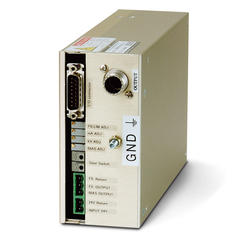
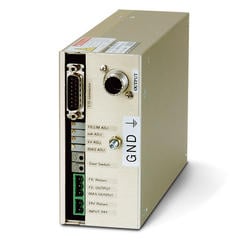
For general XRD applications, our XPg Series is the ideal choice, offering up to 4kW output with an integrated floating AC filament power supply. Please feel free to contact us regarding other high-voltage power supplies for XRD.
Micro-CT / NDT Systems - Microfocus and Low Noise
Micro-focus X-ray tubes used in industrial CT and non-destructive testing require a high-voltage power supply that delivers low noise and a highly stable output. In addition to the accelerating high-voltage supply and the filament supply, a floating grid supply is often needed to focus the electron beam, resulting in a complex, multi-output power-unit architecture. In CT, any variation of X-ray intensity or focal spot during a scan creates artifacts (CT noise), so low noise and high stability are essential.
- Low noise
- Stable tube voltage, electron beam, and tube current
- Focus-size and position stability
- Temperature stability
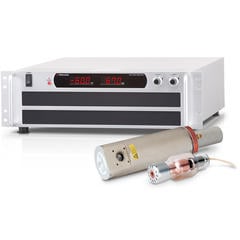
Power supplies for micro-CT and X-ray NDT are typically specialized to match the specific X-ray tube. Please contact us for custom high-voltage power supplies tailored to your requirements. The HEB Series (high-voltage supplies for electron beams) suitable for evaluating electron beam characteristics in microfocus X-ray tubes. Additionally, the XKg Series is effective for high-power, grounded-cathode X-ray tubes.
Food Inspection - Throughput, Reliability and Continuous Stability
Food contamination inspection systems typically employ an integrated X-ray source where the tube and high-voltage supply are housed in a single unit. Since the line runs continuously, long-term reliability and stable output are critical.
- Fast response to line speed variations
- Stable output
- Long life & long-term maintenance
- Safety interlock integration
In most cases, the X-ray tube and high-voltage power supply for food inspection are integrated into a single unit. Consequently, these systems are typically designed as application-specific integrated X-ray source units; these are typically designed and manufactured as dedicated X-ray source units for specific inspection systems.
Key Checks Before Selecting a High-Voltage Power Supply
- What tube voltage (kV) is required?
- What tube current / power level is needed?
- Anode grounded or cathode grounded?
- What high-voltage connector type and wiring method are required?
- What level of stability is necessary?
- How sensitive is the detector to noise?
- What are the operating environment temperature and temperature-coefficient requirements?
- Are there OEM size constraints or communication-interface requirements?
Matsusada Series Recommended by Application
| Application | Recommended Series |
|---|---|
| Small-Form-Factor XRF OEM | XR, XRR, XRT series, OEM |
| WDXRF OEM | XKg series, OEM |
| High-Power XRD | XPg series, OEM |
| Micro-CT / NDT | XKg series, OEM |
| Full Line-up | X-ray Power-Supply List |
Consultation for Specific Tube Specifications
Grounding mode, filament specification, stability requirements, multi-output configurations, high-voltage cables and connectors differ for each application. If you need OEM design support for XRF, XRD, CT, or food-inspection equipment, feel free to get in touch. Our engineers can help you select the ideal grounding configuration and connector type for your specific X-ray tube.