


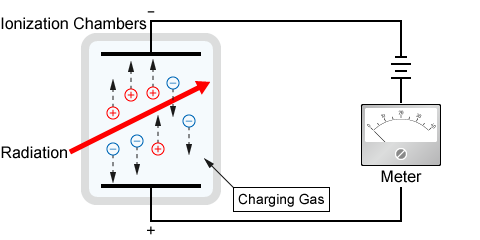
An ionization chamber is a widely used gas-filled radiation detector. It consists of two electrodes placed in a gas-filled container with a high voltage applied between them. When ionizing radiation (such as X-rays, gamma rays, or charged particles) passes through the gas, it ionizes the molecules, creating electron-ion pairs.
The applied electric field causes the electrons to drift toward the positive electrode (anode) and positive ions toward the negative electrode (cathode). This movement creates a small electric current, which is measured to quantify the radiation intensity.
Voltage Requirements
A stable high-voltage bias is critical for accurate measurement. If the applied voltage is too low, the separated ions and electrons may recombine before reaching the electrodes, causing signal loss. Therefore, the power supply must maintain a voltage sufficient to operate in the "saturation region"--typically ranging from several tens to several hundred volts--where recombination is minimized.
Relationship with Proportional Counters and GM Tubes
Ionization chambers, proportional counters, and Geiger-Müller (GM) tubes are all gas-filled detectors, but they operate at different voltage levels:
- Ionization Chamber: Operates at a lower voltage where no secondary ionization occurs. The signal is proportional to the energy deposited.
- Proportional Counter: Operates at a higher voltage. The stronger electric field accelerates electrons enough to cause secondary ionization (gas multiplication), amplifying the signal.
- GM Tube: Operates at an even higher voltage, triggering a large avalanche discharge (Geiger discharge) for every ionizing event.
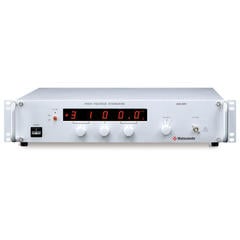
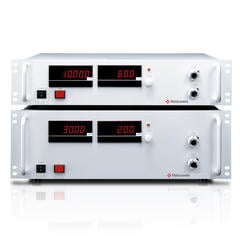
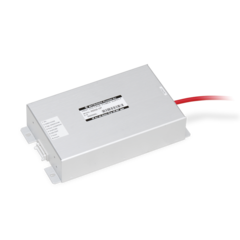
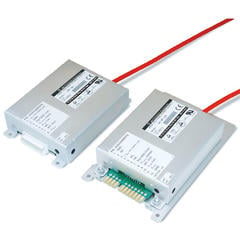
Matsusada Precision offers a wide range of high-voltage power supplies optimized for these detectors, featuring low ripple, compact designs, and high stability.
- Related Terms:
-
- Accelerator
- Radiation
- Radiation detection
- Proportional counter
- GM tube
- Ionization
Recommended products
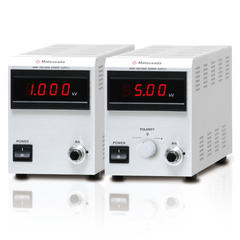
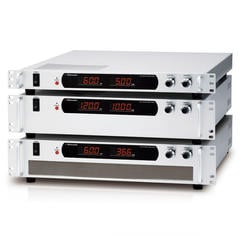
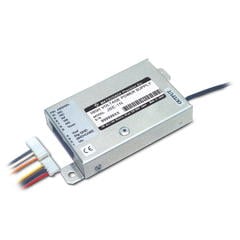
There are a large number of high-voltage power supplies that can be used for ionization chambers, featuring low ripple, a compact body, and ratings of 0 to 1 kV.
Related Technical Articles
- What are X-rays? (Basic Knowledge)
- Safe Operation of X-ray Inspection Systems
- What is the difference between Radioactivity, Radiation, and Radioactive Materials?
- Understanding Radiation: Effects on the Body and X-ray Safety
- Safety and Usage of High Voltage Power Supply
- How to Handle Electric Shock and High Voltage
- High Voltage Measurement Method