
An ion beam consists of ions accelerated to high speeds. An ion is an atom or molecule with a net positive or negative electrical charge. By applying a controlled voltage, ions are accelerated and directed toward a target, gaining kinetic energy proportional to the acceleration voltage. Various electrodes are used to manipulate the beam for acceleration, extraction, suppression, and deflection, depending on the application. Ion beams are utilized in ion engines, sputtering, ion implantation, focused ion beam (FIB) systems, and particle accelerators. To prevent charge buildup on non-conductive samples--which can deflect the beam--the sample surface is often electrically neutralized, typically using a flood of low-energy electrons from a "neutralizer."
To generate an ion beam for FIB, a liquid metal ion source (LMIS) is commonly used. This typically consists of a needle-shaped tungsten filament wetted with gallium. When a strong electric field is applied to the liquid metal tip via an extraction electrode, ions are emitted through field evaporation. A heater maintains the metal in a liquid state. The generated ions are then focused into a narrow, directional stream by the electric and magnetic fields of the accelerator. Electrostatic deflectors are used for ion beam scanning and steering. Ions extracted from the source are focused by a condenser lens (CL) and scanned across the sample. These beams support a wide range of applications, including ion implantation, micromachining, and scanning ion microscopy (SIM).
An ion beam generator comprises an ion source (ion gun), an accelerator with electromagnetic lenses, and a deflection system. The beam passes through the accelerator and is used for implanting impurities into semiconductors (doping), surface cleaning via ion milling, surface modification, and material analysis. The beam is accelerated and decelerated by electric fields in a vacuum and deflected by magnetic fields. Mass separation is performed by bending the ion path within a magnetic field, while energy analysis typically utilizes retarding field or electrostatic deflection techniques.
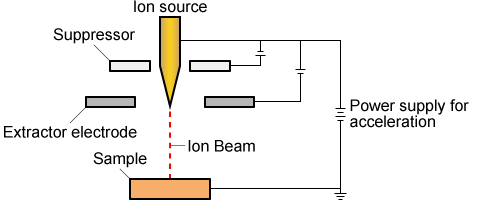
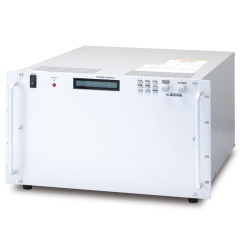
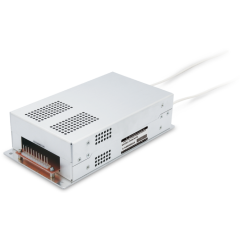
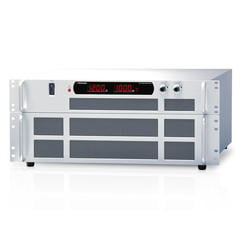
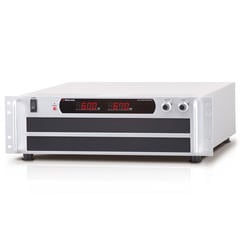
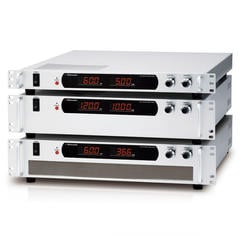
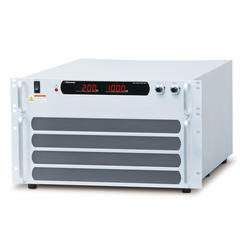
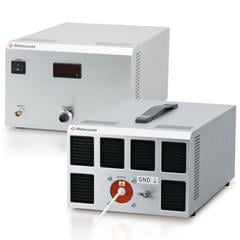
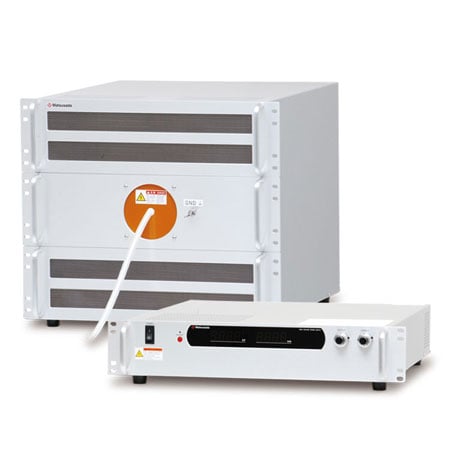
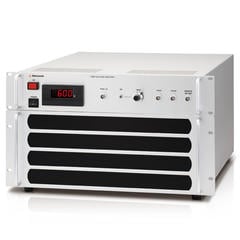
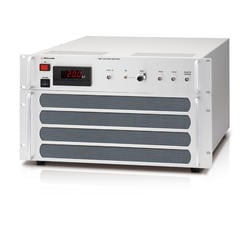
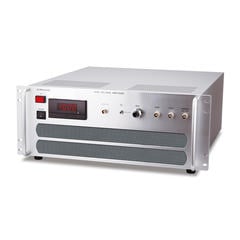
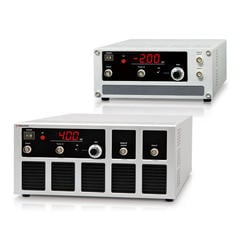
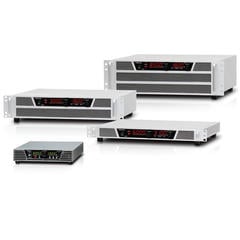
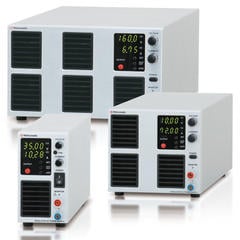
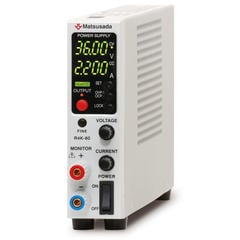
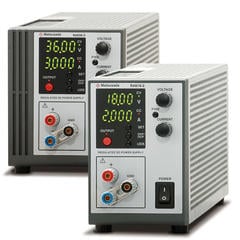
Matsusada Precision offers a comprehensive lineup of power supplies optimized for ion acceleration, extraction, suppression, deflection, focusing, grid bias, and neutralization. Our high-voltage amplifiers are particularly well-suited for electrostatic deflectors, featuring industry-leading response speeds. The integrated DC bias function allows for precise adjustment of the scanning reference point, making these units ideal for demanding scanning electron microscope and FIB applications.
- Related Terms:
-
- ion beam
- ion source
- ion gun
- acceleration
- ion acceleration
- accelerator
- ion implantation
- impurity implantation
- beam transport deflection
- surface processing
- surface modification
- electrostatic deflection (including ion beam steering)
- ion milling
- electrostatically controlling ion beams
- electrostatic lenses
Recommended products
Matsusada Precision offers integrated ion beam power supplies that combine all necessary outputs for ion extraction, acceleration, deflection, focusing, and grids. We also provide individual power supply devices for each of these specific applications.