
Piezoelectric devices utilize the unique properties of materials that convert energy between mechanical and electrical states. Depending on their operating principle, they are broadly categorized into actuators and sensors.
Piezo Actuators (Inverse Piezoelectric Effect)
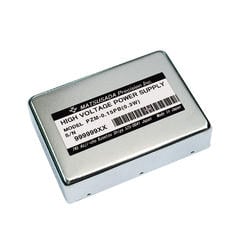
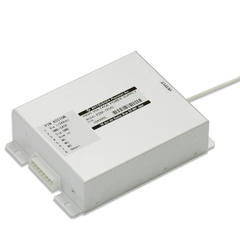
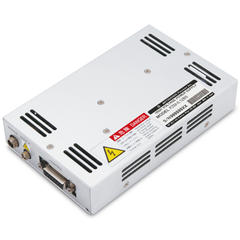
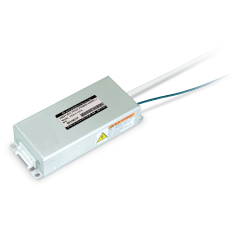
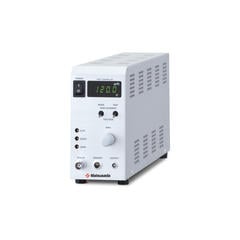
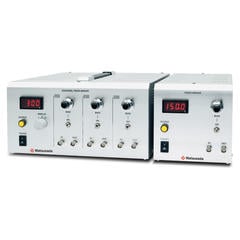
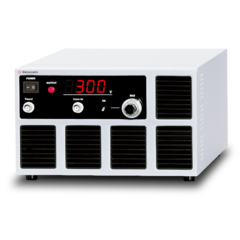
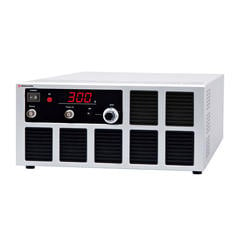
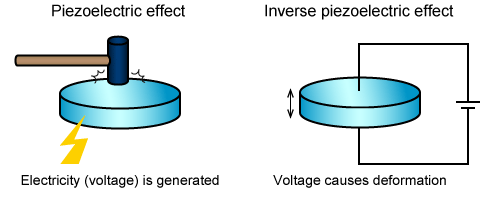
When voltage is applied to a piezoelectric material, it expands or contracts. This phenomenon, known as the inverse piezoelectric effect, is utilized in piezo actuators and stages for high-precision positioning. Since the amount of deformation correlates with the applied voltage, high-voltage drivers are typically required to achieve the desired displacement. Electrically, piezoelectric elements act as capacitors. While they consume minimal power during static (DC) operation, dynamic high-speed driving requires significant current to rapidly charge and discharge the capacitive load. Matsusada Precision's high-power piezo drivers are engineered to handle these challenging loads, ensuring stable, high-speed, and high-precision control.
Piezo Sensors (Direct Piezoelectric Effect)
Conversely, when mechanical force or stress is applied to a piezoelectric element, it generates an electric charge. This is the direct piezoelectric effect, which is utilized in sensors for measuring pressure, vibration, and acceleration.
- Related Terms:
-
- Piezoelectric sensor
- Piezo Actuators
- Piezo Driver
- Piezo Transducers