
High Voltage Power Supply Applications: The Electrophotographic Process
What is Electrophotography (Xerography)?
Electrophotography, also known as xerography, is a printing technology widely used in devices such as laser printers, copiers, and fax machines. This technology, central to everyday printing equipment, utilizes electrostatic forces to transfer toner (a fine powder) onto paper, thereby forming an image.
Achieving this precision process requires highly accurate voltage control at each step. Our high voltage power supplies and high voltage amplifiers play a crucial role in the development and manufacturing of these systems.
The Basic Electrophotographic Process and the Role of High Voltage Power Supplies
The electrophotographic process mainly consists of the following steps: charging, exposure, developing, transfer, fusing, and cleaning. The following sections outline how high-voltage technology is applied in each of these stages.
1. Charging
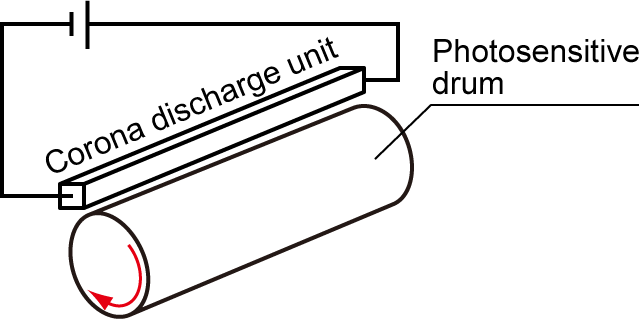
Charging the photoconductor drum is the first step in the printing process. The entire surface of a drum, coated with a photoconductive material whose electrical resistance decreases when exposed to light, is uniformly charged. There are two primary methods for this step:
Corona Charging
This non-contact method involves applying a high voltage to a wire to generate a corona discharge, using the resulting ions to charge the drum's surface. A stable high-voltage power supply creates this discharge by applying voltage to a corona wire. To achieve a more uniform charge, devices called scorotrons, which feature an additional grid electrode, are also utilized. A stable high voltage power supply is essential for these devices.
Contact Charging
In this method, a conductive roller known as a Primary Charge Roller (PCR) is brought into direct contact with the drum, and a high voltage is applied to charge it. A key advantage of this method over corona charging is the reduced ozone generation. Precision high voltage DC power supplies or AC power supplies are used for the PCR.
2. Exposure
The charged photoconductor drum is exposed to light in the pattern of the image or text to be printed. In the areas struck by light, the electrical charge dissipates, creating an invisible electrostatic latent image on the drum's surface.
In a laser printer, a laser beam is reflected by a rapidly rotating polygon mirror to scan across the drum, drawing the latent image.
In an LED printer, a linear array of LEDs (Light Emitting Diodes) is used instead of a laser, creating the latent image with a simpler mechanism.
3. Developing
Charged toner is brought near the surface of the drum where the latent image has been formed. Due to the potential difference between the latent image (the exposed areas) and the rest of the drum, the toner selectively adheres only to the latent image. This makes the image visible.
A bias voltage is applied to the Developer Roller to control the toner adhesion. To achieve sharp, high-quality prints, this bias voltage must be controlled with extreme precision, requiring a low-noise, highly stable high voltage power supply.
4. Transfer & Fusing
Transfer: Paper is pressed against the drum, and a high voltage of the opposite polarity to the toner is applied to the back of the paper. This attracts the toner from the drum onto the paper.
Fusing: The paper, now carrying the toner image, passes through a fuser unit composed of heated pressure rollers. This process melts the toner, permanently bonding it to the paper fibers.
Matsusada Precision's Solutions
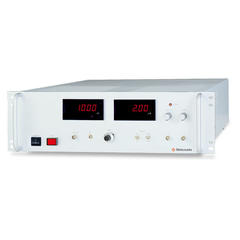
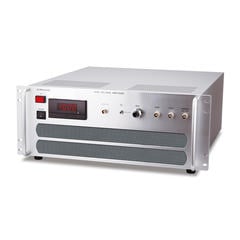
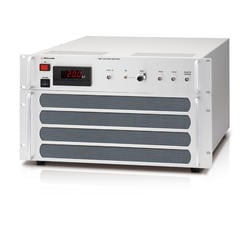
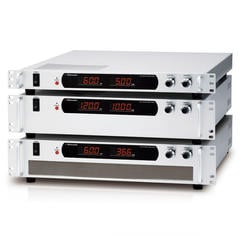
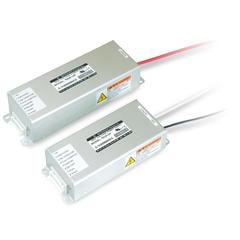
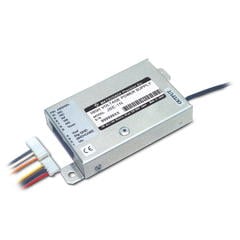
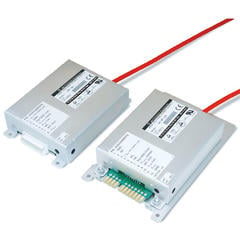
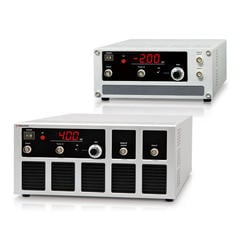
Matsusada Precision provides optimal high-voltage power supply and amplifier solutions for the development, evaluation, and manufacturing of electrophotographic systems. Our products are essential for processes requiring precise voltage control, such as driving corona chargers, Primary Charge Rollers (PCR), and Developer Rollers.
The COR series enables precise current control for corona discharge, ensuring a uniform charge on the photoconductor drum. Additionally, our extensive lineup of high-voltage amplifiers and modular power supplies helps improve the performance and quality of printing technologies.
Engineered for high reliability and compact integration, our products meet the rigorous standards of Japanese manufacturing and are trusted by engineers and researchers worldwide.
- Related Terms:
-
- Corona generator
- Corona charging
- Corona discharging
- Corotron
- Developer roller
- Paper charge
- Photoconductor
- Primary Charge Roller (PCR)
- Scorotron grid supply