
Current sensors are essential for measuring electric current across a vast range, from milliamperes to several thousand amperes. Since applications vary significantly between direct current (DC) and alternating current (AC), selecting the appropriate sensor based on the measurement principle and physical structure is crucial.
Current Transformer (CT) Sensors
In a CT sensor, the magnetic flux generated by the primary current induces a secondary current, typically measured as a voltage across a shunt resistor. This type is widely used for AC measurement.
Hall-Effect Current Sensors
Hall-effect sensors detect the magnetic field generated by current flowing through a conductor using a Hall element. These sensors are versatile and capable of measuring both DC and AC.


Magneto-Impedance (MI)
Current Sensors MI sensors utilize the magnetic impedance effect in amorphous wires. They are characterized by high sensitivity and accuracy, making them suitable for precision applications.

Why Matsusada?
To ensure measurement accuracy and reliability, current sensors require rigorous testing under stable conditions. This demands a power supply capable of delivering precise constant current with extremely low ripple and noise.
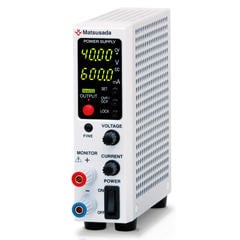
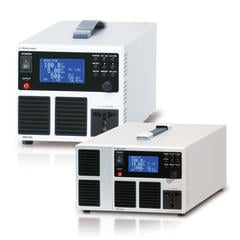
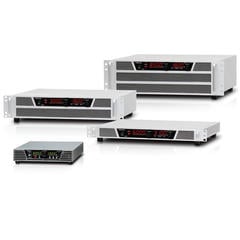
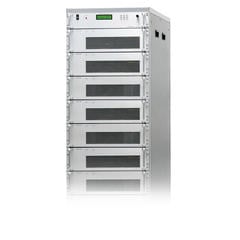
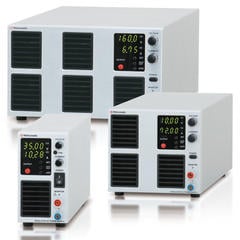
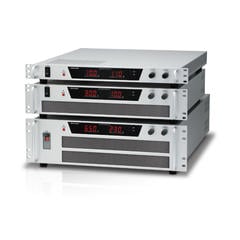
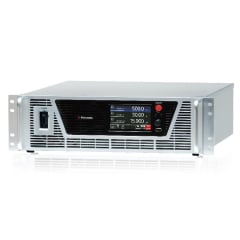
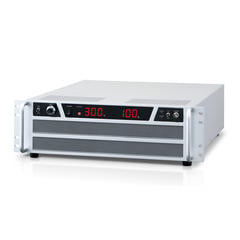
Matsusada Precision offers high-performance DC power supplies optimized for current sensor testing. With a broad lineup covering outputs from a few mA to several thousand amperes (kA), our power supplies provide the stability and low-noise performance necessary for evaluating a wide variety of sensors.
| Applications | Features | |
|---|---|---|
| CT type | Clamp power meters | Low cost, passive operation (no external power required), AC only |
| Hall Effect | Battery management systems | AC/DC measurement, low heat generation, compact |
| MI Sensor | Solar power generation, drones | High sensitivity, low power loss, non-contact measurement |
- Related Terms:
-
- current sensor
- Hall element
- Hall current detector
- Shunt resistor
- MI current sensor
- Hall sensor