
Faraday Cage: From Basics to Measurement Setups
What Is a Faraday Cage?
A Faraday cage is an enclosure made of conductive materials, such as metal mesh or plates, that blocks external electric fields and electromagnetic waves. By shielding its interior, it protects sensitive electronic equipment and data from lightning surges and electromagnetic interference (EMI). These structures are essential in server rooms, medical facilities, and research laboratories.
In addition to protection, Faraday cages are critical for precision static electricity measurements. While voltmeters can detect induced charges on conductors, accurately measuring the charge on non-conductive materials (insulators, powders, or liquids) requires a specialized setup. A Faraday cage-based system isolates the sample from external noise, enabling precise quantification of static charge in fields such as electronic materials, pharmaceuticals, and chemical manufacturing.
Principle and Structure
The principle of the Faraday cage is based on Gauss's law, which describes the relationship between electric charges and the electric fields they generate. The law states that the net electric flux through any closed surface is proportional to the total electric charge enclosed within that surface. (In simple terms, electric charges always create an electric field around them.)
When a conductor is placed in such a field, its free electrons move and redistribute themselves on the surface in a way that cancels the external electric field. As a result, a "field-free zone" is created inside the conductor, where no electric field exists. The Faraday cage applies this principle by surrounding an object with conductive material, effectively shielding its interior from external electric and electromagnetic fields.
Faraday cages can range from fully enclosed metal boxes to mesh structures. Mesh designs offer effective shielding provided the openings are significantly smaller than the wavelength of the electromagnetic waves being blocked.
For static electricity measurements, a double-layered cage configuration--often called a Faraday cup or pail--is used. The measurement object is placed inside an insulated inner cage, while a grounded outer cage provides shielding. According to the principle of electrostatic induction, a charge on the object induces an equal and opposite charge on the inner surface of the inner cage, and an equal charge on its outer surface.
To quantify this charge, an electrometer measures the voltage of the inner cage relative to the ground. Since the voltage (V) is proportional to the total charge (Q) and the system's capacitance (C) is known (Q = CV), the charge on the object can be accurately calculated without direct contact.
Installation Environment and Peripheral Circuits
Static electricity measurements utilizing Faraday cages are widely used in applications that require high-precision quantification of minute charges. This necessitates the proper configuration of the measurement environment and peripheral circuits to attain the highest possible measurement accuracy.
Typical installation environments encompass shielded rooms operated in air and inspection zones incorporated into production lines. A shielded room is an enclosed environment encased by conductive materials such as metal, which, akin to a Faraday cage, obstructs external electric fields and electromagnetic interference. For inspecting electronic components and micro-materials, where even minimal static electricity fluctuations can directly impact product quality, environments resistant to noise, such as shielded chambers, are necessary. However, for applications with less rigorous measurement standards, inspections are generally conducted within simplified inspection zones established along production lines.
Peripheral circuits include electrostatic sensors and electrometers, which can measure surface potential and charge levels of objects without physical contact. This makes them suitable for evaluating electrical conditions without damaging the products.
Furthermore, using a low-noise, unipolar bias power supply is essential for maintaining stable electric fields during measurements. An ideal power supply provides a unipolar output -either positive or negative- between 1 kV and 30 kV, with ripple levels below several tens of ppm and minimal drift during extended operation. This setup minimizes measurement inaccuracies caused by voltage fluctuations, ensuring consistent results across multiple measurements.
Example of a Measurement System Using a Faraday Cage
A static electricity measurement system with a Faraday cage typically consists of the cage, an electrostatic sensor, and a low-noise power supply. To improve accuracy, it is essential to equalize the potential between the cage's metal walls and the fixture (or electrode) holding the sample. This method eliminates even small electrostatic induction caused by the cage, allowing for static electricity measurements in fully shielded conditions.
The typical procedure for measuring the net charge on an object is as follows:
-
Zero the electrometer.
With the cage closed and empty, the connected electrometer is zeroed to establish a baseline. -
Insert the charged sample.
The sample is placed inside the inner cage without touching the walls, and the door is closed. -
Measure the induced voltage and calculate the charge.
The electrometer measures the voltage (V) induced on the inner cage. The total charge (Q) on the sample is then calculated using the known capacitance (C) of the system (Q = CV).
For more advanced applications, such as evaluating a material's charging characteristics, a low-noise high-voltage power supply can be used to apply a bias voltage, as mentioned in the article.
Advantages
A key advantage of the Faraday cage is its ability to simultaneously block electromagnetic waves and static electric fields, making it highly effective for noise mitigation in measurement environments and manufacturing processes.
Another key advantage is the high flexibility in material choices and sizing options. In addition to traditional metal box configurations, mesh structures and complex geometries can be customized as required, supporting adaptable designs for various installation sites and uses. This versatility enables the accommodation of diverse requirements, from compact measurement devices to large shielded rooms, ensuring that Faraday cages are suitable for many industrial fields.
Main Applications
Faraday cages are utilized in various applications and are particularly crucial in industrial settings. Three key examples are electromagnetic compatibility (EMC) test chambers, electromagnetic pulse (EMP) protection rooms, and electrostatic charge measurement cells.
EMC Test Chambers: These facilities verify that electronic devices are immune to external electromagnetic waves and that their electromagnetic emissions do not interfere with nearby equipment. Faraday cages are essential for creating controlled electromagnetic environments and are crucial for validating product performance and ensuring compliance with regulatory standards.
EMP Protection Rooms: These shielded spaces protect equipment from damage or malfunction due to strong EMPs. They have become essential components of cybersecurity efforts and critical infrastructure defense, areas of growing importance.
Electrostatic Charge Measurement Cells: These systems create controlled environments that allow for precise evaluation of electrostatic charge states in products and materials within manufacturing settings. This helps prevent quality issues and defects caused by static electricity, supporting more stable production processes.
Matsusada Precision's High-Voltage Power Supplies for Faraday Cage Applications
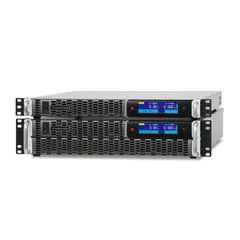
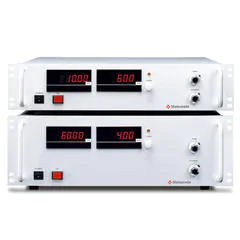
Matsusada Precision offers high-voltage power supplies optimized for static electricity measurement systems using Faraday cages. Our power supplies deliver the low-noise performance and high stability required for precision measurements and bias applications. Additionally, they are engineered for safe integration into high-voltage testing environments where reliable shielding and consistent output are critical.
- Related Terms:
-
- Faraday
- Electromagnetic compatibility (EMC)
- Electromagnetic pulse (EMP)
- Shield
- Noise
- Electromagnetic waves
- Static electricity
- Electrostatic discharge (ESD)
- Electrostatic voltmeter
- Lightning