
Spark Plasma Sintering (SPS) is a powder consolidation technology that simultaneously applies pulsed electric current and pressure, utilizing rapid Joule heating. This technique enables higher density sintering in a shorter time compared to conventional methods relying on external heating. SPS is a versatile process suitable for a wide range of materials requiring high-temperature processing.
SPS is also known by several other names, including:
- Pulsed Electric Current Sintering (PECS)
- Pulse Discharge Sintering (PDS)
- Field Assisted Sintering Technique (FAST)
- Direct Current Pressure Sintering (DCPS)
Related technologies that also utilize electric current for sintering include:
- Electrical Discharge Consolidation (EDC)
- High Voltage Electrical Discharge Consolidation (HVEDC)
- Capacitor High Voltage Electrical Discharge Consolidation (HVEDC)
- Capacitor Electrical Discharge Consolidation (CEDC)
There is another method called Flash Sintering, which is different from SPS and EDC.
There is also the term "Electric powder consolidation (EPC)" as a higher level concept.
The key differences between these three methods are summarized in the table below.
| Item | SPS (Spark Plasma Sintering) |
EDC (Electrical Discharge Consolidation) |
Flash Sintering |
|---|---|---|---|
| Features | The most widespread industrial technology. It is also called PECS or PDS. | Primarily used for prototyping and research, with limited industrial applications. HVEDC and CEDC are its derivatives. | Specializing in ceramic materials, it is extremely energy efficient. However, it is difficult to control the sintering conditions. |
| Basic principle | Pressure sintering while heating the mold with pulsed DC current | Instantaneous heating, sintering, and densification with high-voltage pulses | An electric field is applied during external heating. Once a critical temperature is reached, rapid self-heating occurs, leading to sintering. |
| Voltage | Low voltage (several to several hundred volts) | High voltage (several kV to several tens of kV) | Low voltage (tens to hundreds of volts) |
| Current | High current (several kA) | Very high current (several kA to 10 kA) | Small current at first, rapid increase when heating up |
| Heating method | Joule heat (electrical heating) *Molds are also subject to heating |
Rapid heating due to discharge (self-heating) | External heater + internal self-heating |
| Heating time | Several minutes to tens of minutes | Several ms to several hundred ms (instantaneous) | A few seconds to a few minutes (progresses rapidly during external heating) |
| Pressure application | Applied (Constant pressure: 5 to 100 MPa) | Applied (Impact pressure or simultaneous discharge compression) | Typically none (Powder compact) |
| Sintering Temperature | Medium to high temperature (800 to 2000°C) | Very short-term localized high temperature (lower external temperature) | Slightly higher than room temperature to medium temperature (500 to 1000°C) |
| Material application range | Metals, Ceramics, and Composites | Mainly metal powders and conductive materials | Mainly ceramics (Oxides) |
| Device configuration | Electric pressure furnace (graphite mold + press + power supply) | High voltage capacitor + switch + pressure mechanism | Regular furnace + power supply (small) |
| Representative features | High density and short sintering time Complex shapes are also possible |
Extremely short sintering time (in milliseconds) Requires complex equipment and stringent safety protocols. |
Energy-efficient, low-temperature, and rapid sintering. Process control can be challenging as it is sensitive to trigger conditions. |
| Main Applications | Electronic materials, metal parts, composite materials, tools, etc. | Nanomaterials, functional materials, alloys for research and development, etc. | Zirconia, ceramic thin films, fuel cell materials, etc. |
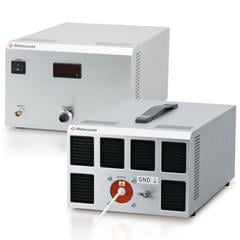
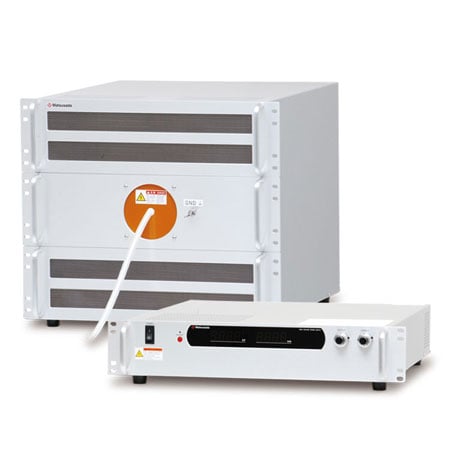
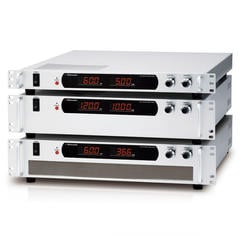
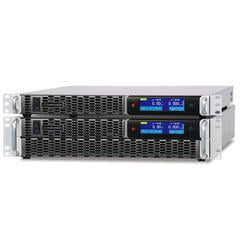
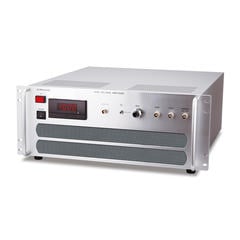
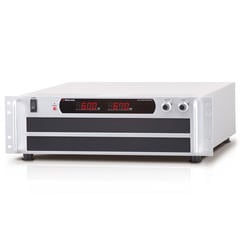
Matsusada Precision manufactures and sells a wide range of power supplies suitable for each of these methods.
Contact us to discuss your specific voltage and power requirements.
- Related Terms:
-
- Spark Plasma
- Sintering
- Flash Sintering
- Pulsed Electric Current Sintering (PECS)
- Field Assisted Sintering Technique (FAST)
- Electrical Discharge Consolidation (EDC)
- Electric powder consolidation (EPC)
- High-voltage pulses
- Electronic materials
- Ceramics (e.g., Zirconia)