
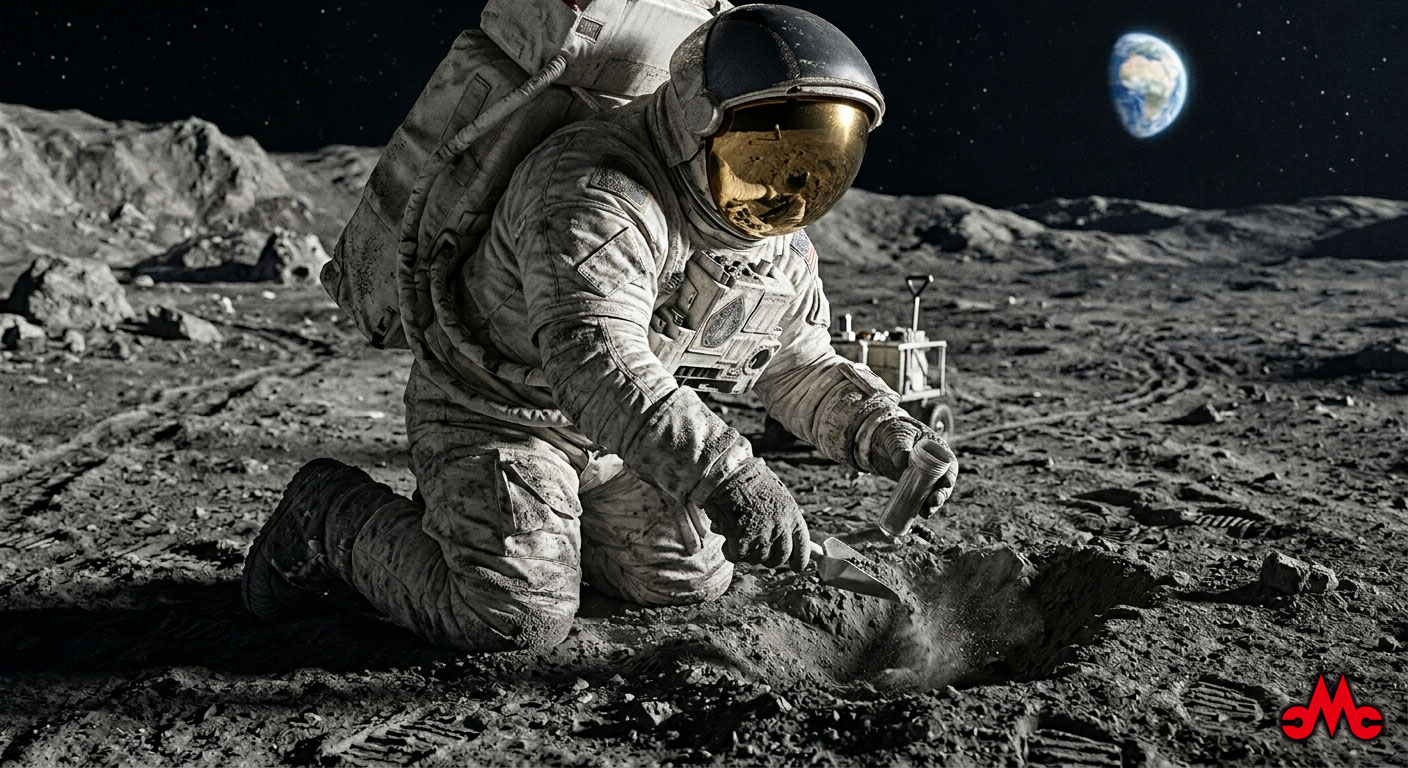
What is Regolith?
Regolith is a general term for the layer of loose, fragmented rock and mineral deposits that covers the surfaces of celestial bodies such as the Moon, Mars, and asteroids. Unlike soil on Earth, it contains virtually no organic matter of biological origin and is primarily formed through impact processes and space weathering.
Lunar regolith, in particular, has been formed over billions of years of micrometeorite impacts. It is characterized by extremely fine particle sizes and highly irregular, sharp, and abrasive shapes. Furthermore, because the lunar surface lacks atmospheric protection, regolith particles can become electrostatically charged through exposure to ultraviolet (UV) radiation, solar wind, and the surrounding plasma environment, resulting in surface adhesion and dust lofting.
While regolith is considered a key resource for future lunar base construction and In-Situ Resource Utilization (ISRU), its adhesion to solar panels, optical instruments, sensors, and spacesuits presents significant challenges by causing performance degradation and mechanical wear. As a result, the development of regolith handling technologies capable of efficient removal, transport, and separation has become an important area of research.
Principles of Electrostatic Regolith Handling
In vacuum environments, regolith particles may retain electrical charges due to particle-to-particle contact, solar wind exposure, and ultraviolet radiation. Electrostatic powder handling technology exploits these properties by applying external electric fields to control and manipulate particles.
Representative approaches include the following:
-
Electrostatic Attraction and Repulsion
By applying high voltage to electrodes to generate an electric field, charged regolith particles can be attracted or repelled, enabling efficient dust removal and collection.
-
Electrostatic Transport
This technique moves charged particles in a desired direction through the application of an electric field. Research is underway into its use for transporting, collecting, and separating regolith.
-
Dielectrophoresis (DEP)
By creating a non-uniform electric field, even uncharged particles can be polarized and induced to move toward regions of higher or lower electric field intensity. This method shows promise for particle sorting based on size, composition, and dielectric properties.
These technologies enable the removal, separation, and transport of regolith while minimizing the need for mechanical moving parts.
Applications of Electrostatic Powder Handling
Electrostatic regolith control technologies are expected to play an important role in future lunar exploration and space development activities.
-
Dust Mitigation Systems
Electric fields can be used to remove regolith adhering to solar panels, camera lenses, optical instruments, and various sensors, preventing performance degradation. Organizations such as NASA are actively developing Electrodynamic Dust Shield (EDS) technologies based on electrode array structures.
-
Resource Recovery and Mineral Separation
In the future, electrostatic technologies may enable the selective separation and concentration of valuable minerals by utilizing differences in electrical and charging characteristics. Such capabilities could contribute to more efficient resource utilization on the Moon and Mars.
-
Regolith-Based Construction and Additive Manufacturing
Electrostatic handling technologies are expected to support powder feeding and material transport processes for future lunar construction systems. Combined with additive manufacturing and regolith sintering technologies, they may help advance infrastructure development using locally available resources.
-
Cleaning of Spacesuits and Exploration Equipment
Sharp regolith particles adhering to astronaut spacesuits and exploration equipment can be removed electrostatically, reducing material wear and seal degradation. This capability is considered essential for long-duration lunar surface operations.
Power Supplies Required for Electrostatic Powder Handling
Efficient manipulation of regolith requires the generation of powerful and precisely controlled electric fields capable of exerting sufficient electrostatic force on fine particles. As a result, high-performance high-voltage power supplies and high-voltage amplifiers play a critical role in these systems.
-
High-Voltage Output
Regolith manipulation and dust removal typically require applied voltages ranging from several hundred volts to several kilovolts or more. Depending on the application, even higher electric field strengths may be required.
-
Precise Voltage Control
To accurately control particle velocity, transport direction, and separation performance, power supplies must provide stable output characteristics and high control accuracy.
-
Waveform Control Capability (AC and Pulse Output)
In addition to DC voltage, AC and pulsed waveforms can improve particle transport efficiency and optimize dust removal performance.
-
High Reliability and Long-Term Stability
Ground-based research facilities and simulated space-environment test systems require highly reliable power supplies capable of maintaining stable high-voltage output over extended periods. Ongoing technology development is also supporting future space applications.
Our Solutions
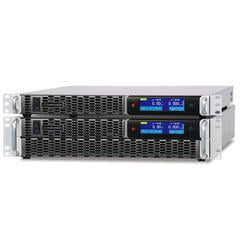
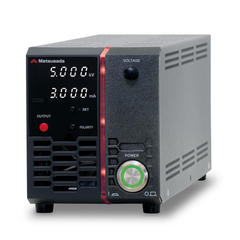
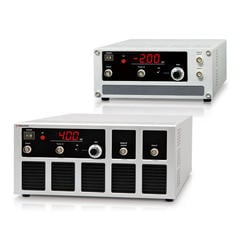
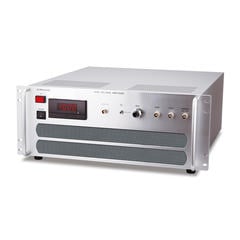
We provide high-voltage power supplies, high-voltage amplifiers, and bipolar power supplies that support electrostatic regolith handling technologies and space-environment research. Our solutions support a broad range of applications, from fundamental research and technology development to environmental simulation and performance evaluation testing.
Academic Paper on Regolith Research Using Matsusada Precision High-Voltage Power Supplies
- Related Terms:
-
- Regolith
- In-Situ Resource Utilization (ISRU)
- Electrostatic Regolith Handling
- Electrodynamic Dust Shield (EDS)
- Dielectrophoresis (DEP)
- High-Voltage Power Supply
Recommended products
Regolith is a general term for the layer of loose, fragmented rock and mineral deposits that covers the surfaces of celestial bodies such as the Moon, Mars, and asteroids.