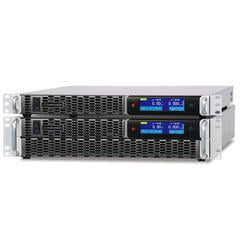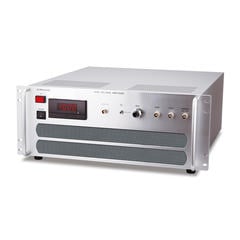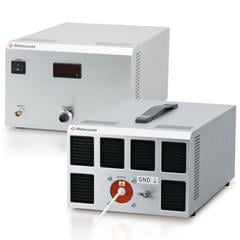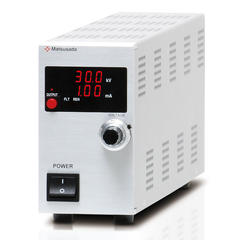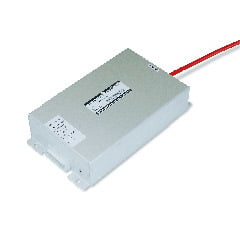

Pulsed Electro-Acoustic (PEA) measurement is a non-destructive method for analyzing space charge distribution inside insulators and dielectric materials. A test sample is placed between two electrodes. When a high-voltage pulse is applied, the electric field exerts a force on the internal space charges, generating a pressure wave (acoustic wave). A piezoelectric sensor detects this wave and converts it into an electrical signal. The signal's magnitude is proportional to the charge quantity, while the time delay between the pulse application and signal detection indicates the charge's spatial location.
This method is standardized by the International Electrotechnical Commission (IEC) under IEC TS 62758:2012 ("Calibration of space charge measuring equipment based on the pulsed electro-acoustic (PEA) measurement principle"). In Japan, the corresponding standard JEC-TR-61004-2012 was established by the Japanese Electrotechnical Committee (JEC). Matsusada Precision provides high-performance high-voltage power supplies widely adopted as DC bias sources for PEA measurement systems.
- Related Terms:
-
- Dielectric
- insulating material
- charge distribution
- high voltage