
Light Amplification by Stimulated Emission of Radiation (LASER)
The acronym LASER stands for Light Amplification by Stimulated Emission of Radiation. Unlike conventional light sources, lasers emit beams with unique optical properties: monochromaticity (narrow spectral width), high directionality (low divergence), and coherence (synchronized phase).
Basic Principle and Structure
A laser system generally consists of three fundamental elements:
- Pump Source: Supplies energy to the system (often requires a precision DC power supply).
- Gain Medium: The material where excitation and light amplification occur.
- Optical Resonator: Mirrors that amplify light through optical feedback.
The process begins with spontaneous emission, where excited electrons transition to a lower energy state, releasing photons. When these photons interact with other excited atoms, they trigger stimulated emission, generating new photons that match the incident photons in phase, wavelength, and direction.
Types and Applications
Lasers are categorized by their gain medium--Solid-state (e.g., YAG, Fiber), Gaseous (e.g., CO2, Excimer), Liquid (Dye), and Semiconductor (Laser Diodes). They cover a vast spectrum from Infrared and Visible light to Ultraviolet and X-rays.
In industrial and research fields, lasers are utilized based on their output characteristics:
- High-Power Processing: Cutting, welding, marking, and ablation (vaporization).
- Precision Measurement: Alignment, leveling, and interferometry using visible light.
- Medical & Scientific: Laser scalpels, dermatology, and spectroscopy.
Lasers are categorized by the physical state of their gain medium into four main types: Solid-state (e.g., YAG, YVO4, Ytterbium), Gaseous (e.g., CO2, Excimer, Argon), Liquid (e.g., dye lasers), and Semiconductor (e.g., laser diodes).
Lasers are also classified by their output wavelength, ranging from Infrared and Visible Light to Ultraviolet and X-ray.
In terms of application, visible lasers are essential for alignment and leveling, while invisible lasers are often used for marking. Furthermore, the high energy density of lasers is utilized in industrial processes such as cutting, welding, and material ablation (vaporization), as well as in medical procedures using laser scalpels.

- Related Terms:
-
- Laser Oscillation
- Semiconductor
- Laser Diode (LD)
- Fiber laser
- Pump Source
- Constant Current (CC) power supply
- Laser Diode (LD) Driver
- CW (Continuous Wave)
Recommended products
Precision Power for Laser Systems
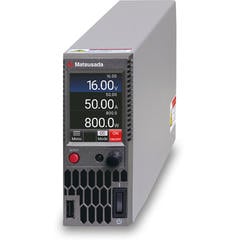
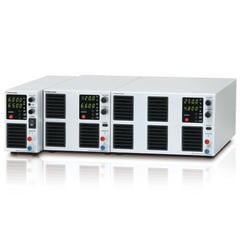
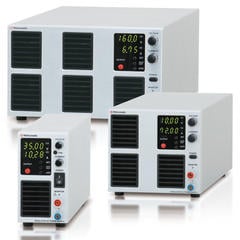
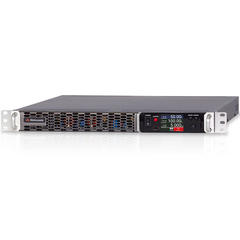
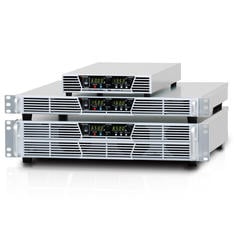
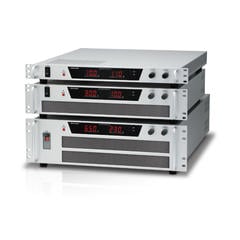
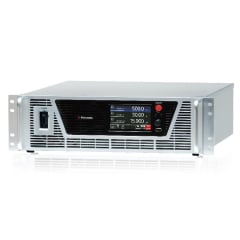
Stable and low-noise power input is critical for laser performance. Fluctuations in the pump source can lead to instability in wavelength and optical output. Matsusada Precision offers high-performance programmable DC power supplies optimized for laser system components, including laser diodes (LD), lamp-pumped solid-state lasers, cooling systems (Peltier/chillers), and control electronics.