
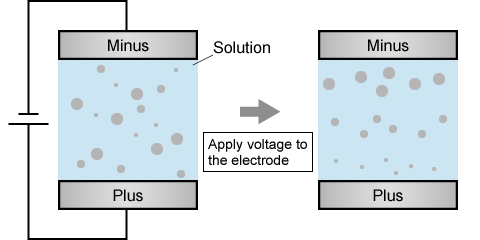
Electrophoresis is the movement of charged particles in a fluid or gel under the influence of an electric field. This technique is widely used in life sciences to separate macromolecules, such as DNA, RNA, and proteins, based on their size and charge.
In gel electrophoresis, samples are loaded into a gel matrix. When an electric field is applied, the gel acts as a molecular sieve. Smaller molecules migrate faster through the pores, while larger molecules move slower, resulting in separation based on size.
For example, DNA molecules carry a negative charge and naturally migrate toward the positive electrode (anode). Smaller fragments travel further than larger ones, allowing for size analysis. Similarly, SDS-PAGE is used for proteins. The SDS detergent denatures proteins and imparts a uniform negative charge, ensuring separation is based strictly on molecular weight. These techniques are fundamental in molecular biology and biochemistry research.
- Gel Electrophoresis
- Polyacrylamide Gel Electrophoresis (PAGE)
- Agarose Gel Electrophoresis (Submarine Electrophoresis)
- SDS Electrophoresis
- Capillary Electrophoresis (CE)
-
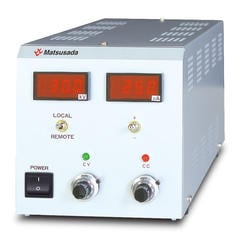
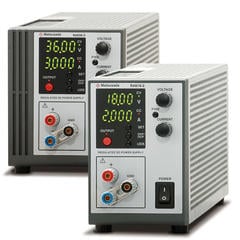
- For many standard gel electrophoresis applications, a DC power supply providing up to several hundred volts is sufficient. For more demanding techniques, we recommend a high-voltage power supply such as the R4G650-0.1 (650 V, 100 mA).
- Example: R4G650-0.1
-
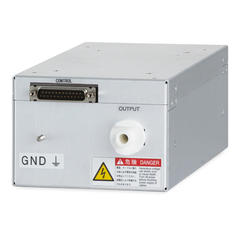
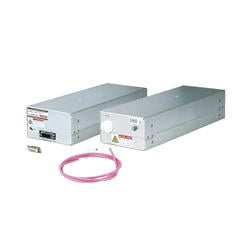
- Capillary electrophoresis (CE), however, requires significantly higher voltages, typically in the range of 10-30 kV, for effective separation.
- Example: CZE, CZ9, K12-R, KAS-R series
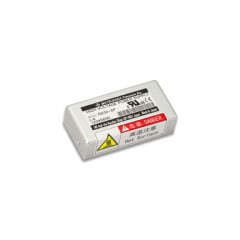
Matsusada Precision offers a lineup of high-voltage power supplies for applying voltage to electrodes for electrophoresis, as well as power supplies that can switch between positive and negative electrode output.
- Related Terms:
-
- electrophoresis
- electrophoresis research
- charged particle molecule
- protein
- DNA
- cellular electrophoresis
Recommended products
We have a variety of products in our lineup, including high-voltage power supplies for applying voltage to electrodes for electrophoresis, and power supplies that can switch between positive and negative output.