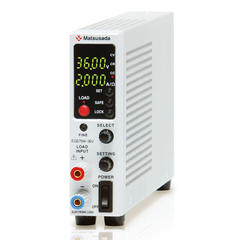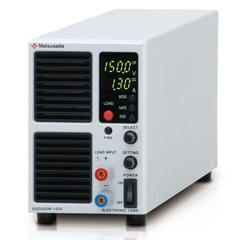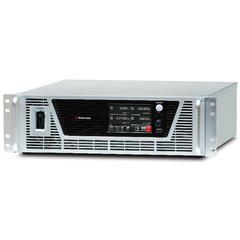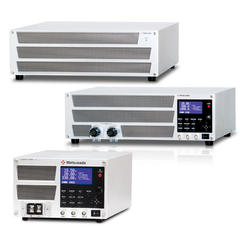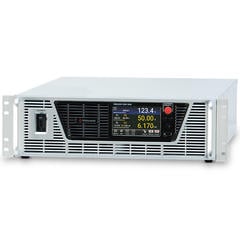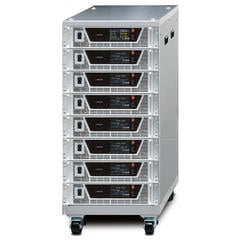

Electronic loads are precision instruments designed to sink current and absorb power, simulating the electrical characteristics of a real-world load.
In the development and evaluation of power supplies, using actual loads or passive resistors is often impractical due to inflexibility and thermal management challenges. Electronic loads solve these issues by providing precise, adjustable control, enabling engineers to easily simulate complex behaviors--such as dynamic current changes--that are difficult to reproduce with fixed resistors.
- Electronic load applications: Power supply circuit evaluation
- Advantages of using electronic loads: Enable safe and reliable testing under dynamic load conditions.
While conventional electronic loads dissipate absorbed power as heat, regenerative electronic loads (bidirectional power supplies) return energy back to the AC grid.
For high-power applications, this regenerative capability offers significant advantages, including drastically reduced electricity costs and simplified thermal management within the test environment.