
Ultrasonic Technology and Power Supply Solutions
Ultrasonic technology is utilized in various fields of modern society, from industrial product manufacturing to medical diagnosis. The performance of processes such as ultrasonic machining, cleaning, welding, non-destructive testing, and medical diagnosis largely depends on the performance of the power supplies and generators that drive the ultrasonic transducers. This page explains the basic knowledge of ultrasonic waves and the power supply technology required to maximize their performance.
What is Ultrasonic?
Ultrasound refers to sound waves with frequencies above the upper limit of human hearing, generally 20 kHz. Sound waves are mechanical vibrations that propagate through mediums such as air, liquids, and solids, and ultrasonic waves are a type of these waves. Generally, sound waves of 20 kHz or higher are called ultrasonic. Frequency bands from 20 kHz to several MHz are widely used in industrial applications, while frequencies from several MHz to tens of MHz are used in medical diagnostic applications. Ultrasound exhibits strong directionality and possess properties that cause them to reflect, absorb, or transmit when they hit an object. Utilizing these properties, various applications such as machining, cleaning, welding, measurement, inspection, and medical diagnosis are realized.
Principles of Ultrasound Generation
To generate ultrasonic waves, ultrasonic transducers incorporating piezoelectric elements are widely utilized.
-
Generation of Ultrasonic Waves by the reverse piezoelectric effect
When an alternating voltage is applied to a piezoelectric material such as PZT (lead zirconate titanate), the material expands and contracts according to the polarity of the voltage. This phenomenon is called the reverse piezoelectric effect. By applying a high-frequency AC voltage, the piezoelectric element vibrates at high speed, converting electrical energy into mechanical vibration energy to generate ultrasonic waves.
-
The Importance of Resonance
An ultrasonic transducer has an inherent resonant frequency determined by its shape and material. Driving the transducer near its resonant frequency allows for a large vibration amplitude with minimal input power, enabling highly efficient energy conversion. Therefore, it is crucial for many ultrasonic systems to operate while maintaining this resonance point.
Applications of Ultrasonic
1. Industrial Processing and Precision Machining (High-Power Applications)
Ultrasonic Machining
By superimposing ultrasonic vibrations on a cutting or machining tool, high-precision machining is achieved even for materials that have traditionally been difficult to process.
- Machining of hard and brittle materials such as ceramics, glass, sapphire, and SiC wafers
- High-precision machining of semiconductor materials and electronic components
- Micro-drilling, cutting, and polishing
Ultrasonic-Assisted Cutting/Machining
By adding ultrasonic vibration to cutters or drills, the contact between the tool and the workpiece becomes intermittent, which achieves:
- Reduction of frictional resistance
- Mitigation of cutting load
- Suppression of burrs
- Improvement of machining accuracy
Ultrasonic Welding
This is a technology that joins plastic parts or films using high-frequency vibrations. It is widely used in the manufacturing processes of automobiles, electronic devices, and medical equipment.
Ultrasonic Cleaning
This process removes contaminants from component surfaces and inside microscopic structures by utilizing cavitation and acoustic streaming generated in a liquid.
Ultrasonic Atomization
This technology generates a fine mist by applying ultrasonic vibrations to a liquid. It is utilized in coating equipment, humidifiers, and medical devices.
2. Measurement and Inspection Applications
Non-Destructive Testing (NDT)
By propagating ultrasonic waves into the interior of a material and analyzing the reflected waves, internal defects, cracks, and delamination can be detected.
Distance Measurement and Position Detection
By measuring the propagation time of ultrasonic waves, the distance and position relative to the target object can be detected with high accuracy. This is widely adopted in:
- Level meters
- Distance sensors
- Proximity sensors
Ultrasonic Flow Meters
Ultrasonic flow meters measure fluid flow without direct contact with the process fluid.
3. Medical Applications
Diagnostic Ultrasound Systems (Echography)
This equipment visualizes internal tissues and blood flow conditions by transmitting ultrasonic waves into the body and analyzing the reflected waves.
Therapeutic Ultrasound
This utilizes focused ultrasound or high-intensity ultrasound to perform tissue treatment and medical procedures.
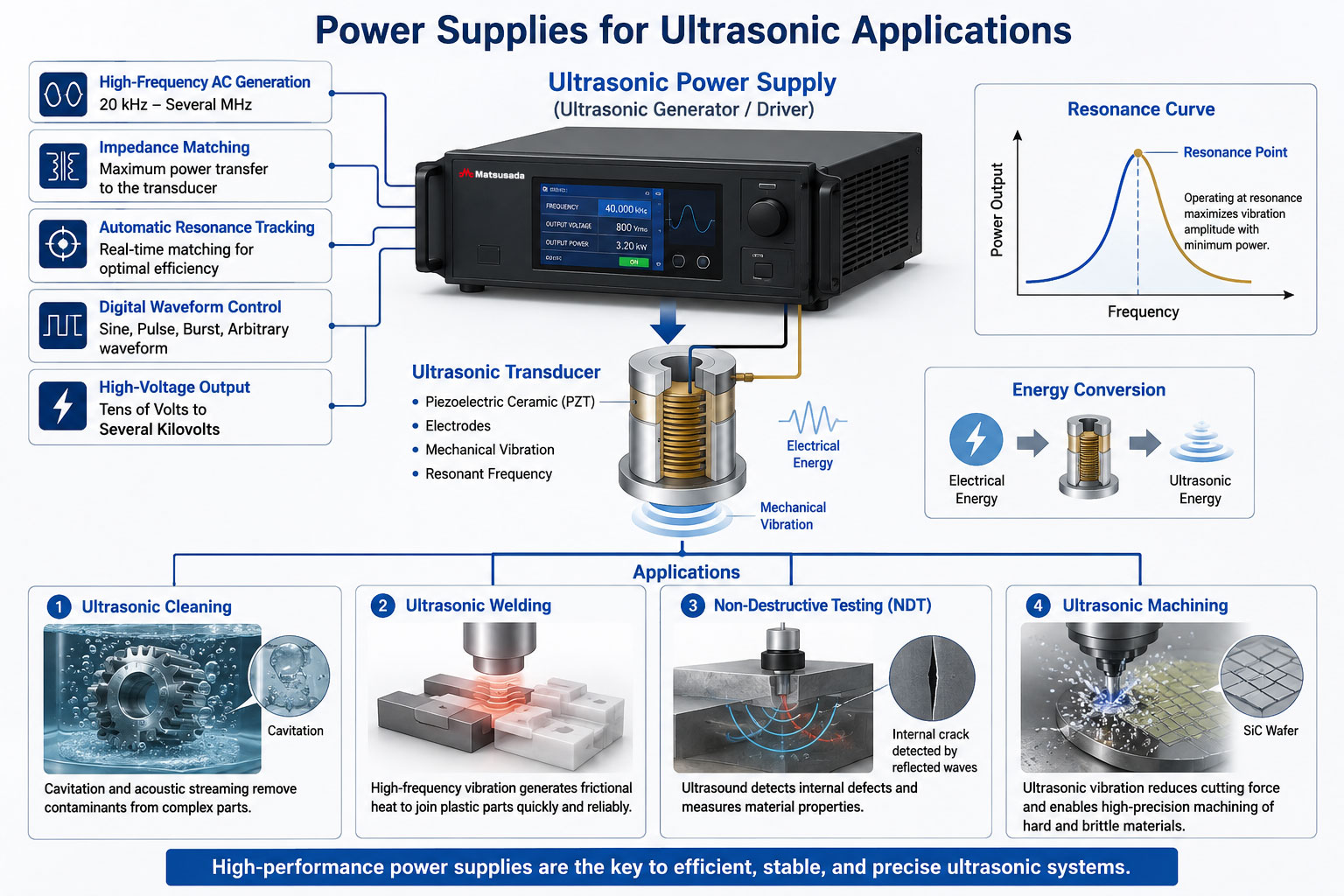
Power Supply Requirements for Ultrasonic Systems
To drive ultrasonic transducers efficiently, dedicated power supplies called ultrasonic drivers (ultrasonic generators) or ultrasonic power supplies are required rather than general DC or AC power supplies. Depending on the application, technology is required to stably supply high-frequency voltages ranging from tens of volts to hundreds of volts, or even into the kilovolt range.
Functions and Characteristics Required for Power Supplies
1. Wide Frequency Range Operation
It is necessary to generate high-frequency AC voltages from 20 kHz to several MHz depending on the application, and to drive the ultrasonic transducer at the optimal frequency.
2. Impedance Matching
Since a piezoelectric transducer behaves as a capacitive load, impedance matching between the power supply and the transducer is critical. Without proper matching, problems such as the following will occur:
- Decrease in power transmission efficiency
- Increase in heat generation
- Insufficient output This technology is particularly indispensable for high-power ultrasonic machining equipment and ultrasonic welding equipment.
3. Waveform Control and Stability
Optimal waveform generation is required according to the application.
- For Non-Destructive Testing Applications:
-
- High-voltage pulse driving
- Short pulse generation
- Fast rise time characteristics
- For Medical Applications:
-
- Low noise
- High-stability frequency control
- High-precision pulse control
4. Automatic Resonance Tracking
The resonant frequency of an ultrasonic transducer changes due to temperature variations and load fluctuations. Therefore, high-performance ultrasonic generators monitor the phase difference between voltage and current as well as impedance changes in real-time, automatically tracking to the optimal resonant frequency. This enables:
- Improvement of vibration efficiency
- Reduction of heat generation
- Maintenance of stable output
The Importance of Power Supplies in Ultrasonic Systems
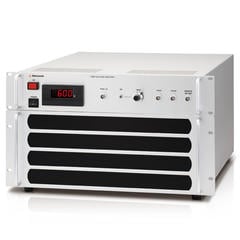
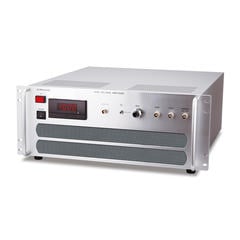
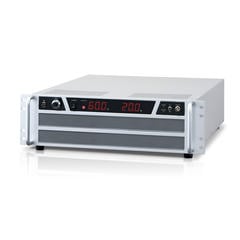
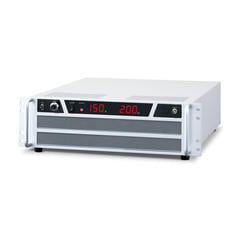
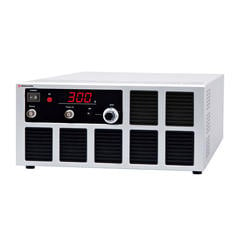
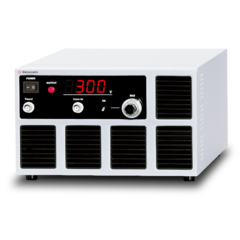
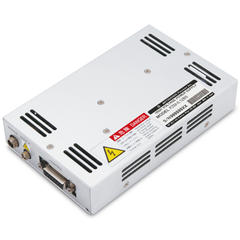
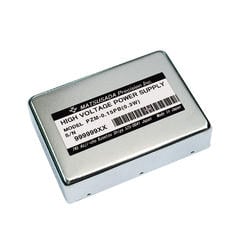
The performance of an ultrasonic system is heavily influenced not only by the ultrasonic transducer itself but also by the performance of the power supply and generator that drives it. Achieving highly efficient energy transfer, high-precision frequency control, and stable output supply leads to improvements in machining quality, inspection accuracy, and productivity. Matsusada Precision offers a wide range of high-voltage power supplies for driving ultrasonic transducers and piezoelectric devices, as well as power modules designed for integration into ultrasonic drivers and various control systems. We provide power supply solutions optimized for each customer's ultrasonic application, enabling stable, efficient, and reliable system operation.
- Related Terms:
-
- Ultrasound
- Ultrasonic Transducer
- Piezoelectric Element
- Ultrasonic Generator
- Ultrasonic Power Supply
- Ultrasonic Cleaning
- Ultrasonic Welding
- Ultrasonic Machining
- Non-Destructive Testing (NDT)
- Resonant Frequency
- Piezo Driver
- Piezoelectric Transducer