
Published: , Modified:
Lock-in Thermography (LiT) is an advanced analytical technology that applies periodic electrical excitation to semiconductor device packages, printed circuit boards (PCBs), and other test targets to detect defects and abnormalities based on localized heat generation (hot spots). By detecting minute temperature variations often missed by conventional infrared thermography, LiT allows for faster and more precise localization of defects.
Lock-in thermography synchronizes the image acquisition of a high-speed infrared camera with periodic electrical energy. The name "lock-in" is derived from this synchronization mechanism. Sources of cyclic electrical energy include high-voltage amplifiers, bipolar power supplies, and pulsed power supplies. In addition to electrical energy, other excitation sources such as ultrasound, microwaves, flash lamps, lasers, or physical stress can be used to apply a thermal load to the object. This technology is essential for product failure analysis and non-destructive testing (NDT), including potential defect analysis, thermal design verification, and battery thermal management.
Principles of Lock-in Thermography
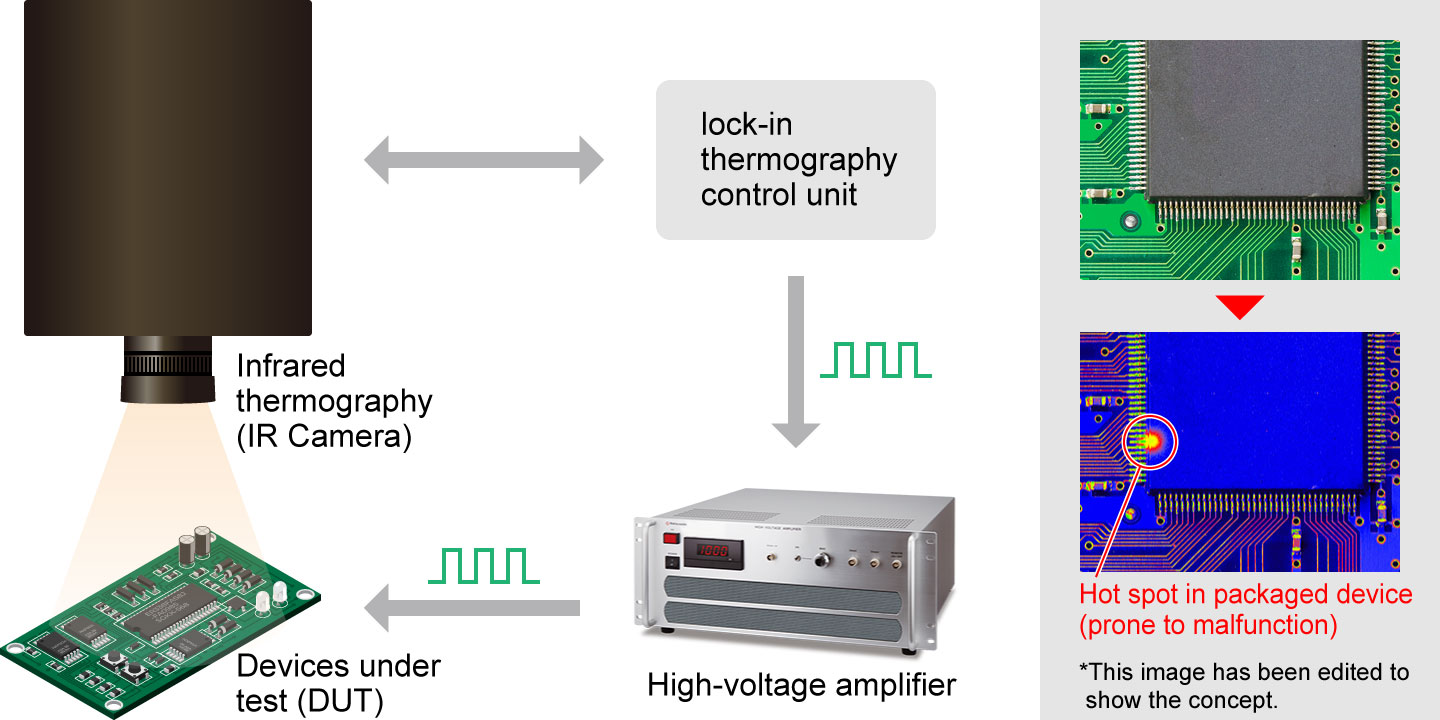
When periodic electrical energy is applied to the object under inspection, it generates thermal waves that propagate from the heat source. These waves are reflected or scattered at subsurface features with distinct thermal properties, such as delaminations and inclusions. The propagation and reflection of these thermal waves cause localized variations in the phase and amplitude of surface temperature oscillations. Lock-in thermography detects small temperature variations by synchronizing thermal signals with a reference modulation signal.
In lock-in thermography, a periodically modulated electrical signal is applied to the device under test to generate synchronized thermal responses. High-voltage amplifiers play a critical role by providing precise and stable AC excitation, enabling accurate control of the modulation frequency and improving the signal-to-noise ratio for defect detection.
This thermal response is captured by an infrared camera, and the temperature data is analyzed using the lock-in method. This technique significantly improves the signal-to-noise ratio, enabling the detection of extremely slight temperature changes. By analyzing the phase shift and amplitude of the thermal wave, lock-in thermography derives information about the internal structure of the inspected object, revealing defects such as cracks, delaminations, cavities, and other sub-surface anomalies. For example, the depth of a defect can be estimated from the phase shift, as deeper defects exhibit a greater phase lag. Furthermore, adjusting the lock-in frequency allows operators to control the analysis depth.
Lock-in thermography is used in a variety of industries, including electronics, aerospace, automotive, and materials science.
- Electronics: Semiconductor devices, short-circuits in electronic components, Printed Circuit Boards (PCBs), current leakage, ESD defects, gate oxide damage, defect detection in transistors, solar cells, dielectric breakdown, and whiskers.
- Aerospace: Inspection of turbine blades and internal defect detection in critical components such as composite structures.
- Automotive: Failure evaluation of components including batteries, motors, and Electronic Control Units (ECUs); battery thermal management for electric vehicles (EVs).
- Thermal Design and Analysis: Product defect analysis, thermal design verification, and thermal analysis of critical components such as batteries and PCBs.
- Related Terms:
-
- Lock-in Thermography (LiT)
- high-voltage amplifier
- infrared thermography
- Hot spot
- internal defect inspection
- Short-circuit
Recommended products
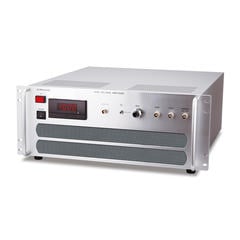
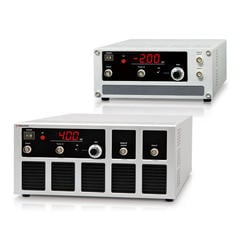
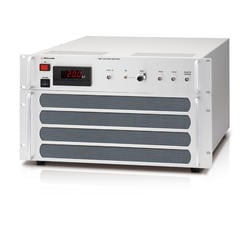
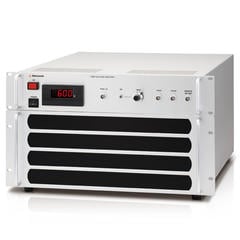
Matsusada Precision produces high-speed and high-voltage amplifiers for lock-in thermography.