
Dielectrophoresis (DEP) is a phenomenon in which dielectric particles, such as biological cells, are subjected to a force when placed in a non-uniform electric field. Unlike electrophoresis, which relies on electrical charge for separation, DEP acts on particles based on their dielectric properties, allowing for the manipulation of both charged and electrically neutral particles. This versatility makes DEP an essential technique in biochemistry, widely used for cell separation in drug discovery, medical diagnostics, and cell therapy.
- See: "Cell Separation"
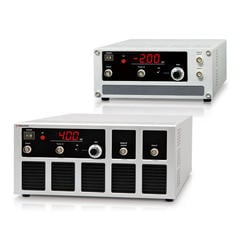
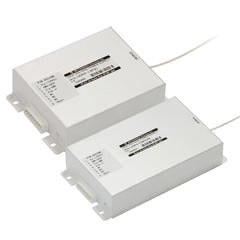
Generating the specific forces required for DEP manipulation involves precise control over the electric field's amplitude and frequency. High-voltage amplifiers are critical for this application, enabling researchers to drive electrodes with the high-speed, high-voltage AC waveforms necessary for effective particle manipulation.
- Related Terms:
-
- Cell Separation
- Electrophoresis
- Capillary Electrophoresis (CE)
- Gel Electrophoresis
- drug discovery
- medical diagnostics
- cell therapy