
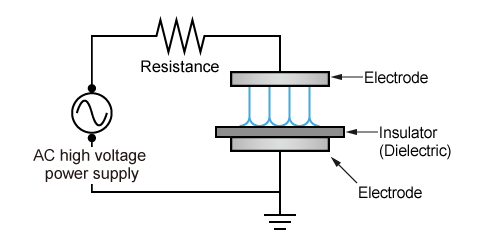
Dielectric Barrier Discharge (DBD) is a discharge that occurs when an AC voltage is applied to one or both of the electrodes made of two metal plates and covered with an insulator. The insulating material functions as a capacitor, storing electrical charge. This insulating material is referred to as a dielectric. Glass, alumina, and polymer films are used as dielectric materials. It is also possible to use water or electrolyte solutions as dielectrics.
In a dielectric barrier discharge, excessive and rapid discharge is suppressed by the insulator, resulting in a discharge that does not produce an arc (spark). This is why it is also called silent discharge. During the discharge, a purplish glow, which is the plasma, can be observed in the discharge area.
During each half-cycle of the AC voltage, charge accumulates on the surface of the dielectric. This accumulated surface charge creates an opposing electric field. Consequently, when the applied voltage reverses polarity, a discharge can be initiated at a lower voltage than required for the initial breakdown. This mechanism allows for a continuous and more energy-efficient discharge process.
Applications of DBD include ozone generators, plasma displays, excimer lamps, and the decomposition of harmful exhaust gases like NOx and SOx. Other technologies, such as the DBD-Plasma Actuator (DBD-PA), an actuator that controls the flow using a dielectric barrier discharge, are also being researched and developed.
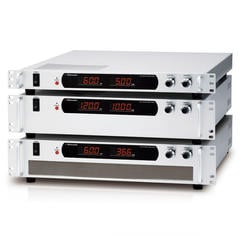
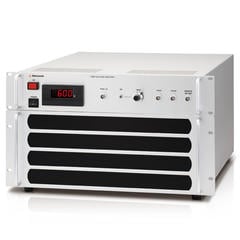
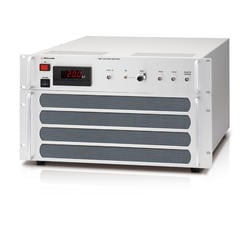
Matsusada Precision offers a range of products, including high-voltage amplifiers, that provide the AC or pulsed outputs required for dielectric barrier discharge applications.
Our high-voltage power supplies are used in the development of dielectric barrier discharge (DBD) plasma actuators.
- Related Terms:
-
- Dielectric Barrier Discharge Plasma Actuator (DBD-PA)
- Electrode
- Insulator
- Discharge
- Pulse
Recommended products
Matsusada Precision offers a range of products, including high-voltage amplifiers, that provide the AC or pulsed outputs required for dielectric barrier discharge applications.