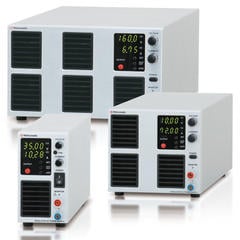

What is Radiocarbon Dating Using AMS?
Radiocarbon dating, also known as Carbon-14 dating, is an analytical method used to estimate the age of organic materials by measuring the amount of radiocarbon (14C), a radioactive isotope of carbon, remaining in a sample.
Conventional radiocarbon dating methods relied on measuring the radiation emitted during radioactive decay. Today, however, Accelerator Mass Spectrometry (AMS) is widely used because it enables highly accurate age determination from extremely small sample quantities.
Because AMS directly measures the carbon isotope ratio (14C/12C) within a sample, it provides significantly higher sensitivity and precision than conventional decay-counting techniques. This technology is widely employed in archaeology, geology, paleontology, and environmental science, making it an indispensable tool for studying historical artifacts and reconstructing past environmental changes.
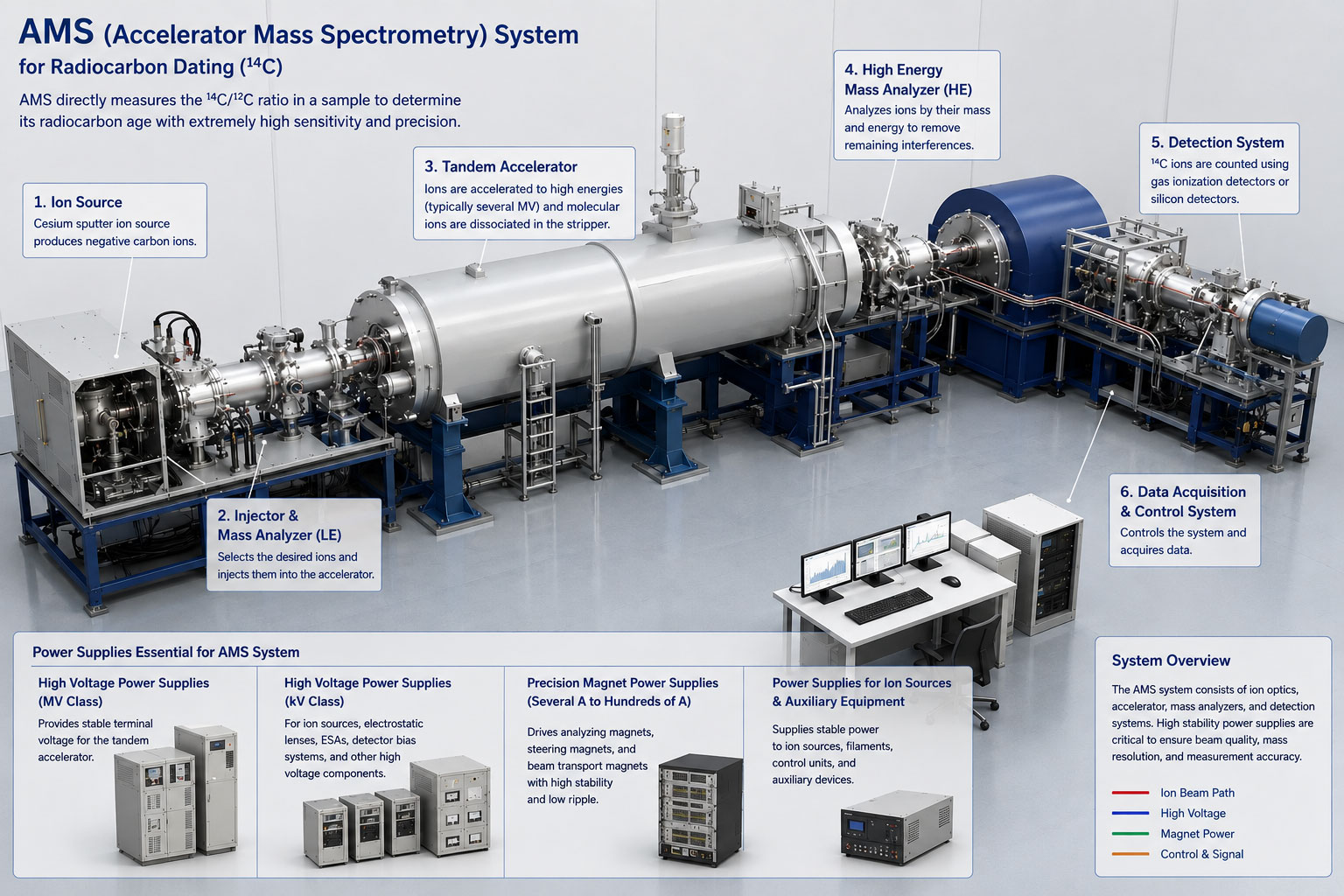
Operating Principle of Radiocarbon Dating Using AMS
Living organisms continuously incorporate carbon (12C and 14C) from the atmosphere through respiration and the food chain. When an organism dies, the intake of new carbon ceases, and the 14C already present in the organism begins to decay with a half-life of approximately 5,730 years.
To measure the remaining 14C content with high precision, AMS determines the 14C/12C ratio through the following process.
-
Ionization
Carbon extracted from the sample is converted into negative ions. AMS utilizes negative ion formation because 14N, the principal isobaric interference, does not form stable negative ions. This characteristic significantly improves selectivity and measurement sensitivity.
-
Acceleration
The generated negative ions are injected into a tandem accelerator and accelerated by terminal voltages ranging from several hundred kilovolts to several megavolts.
-
Molecular Dissociation and Re-acceleration
Within the stripper section of the accelerator, molecular ions are dissociated and converted into multiply charged positive ions. This process effectively removes molecular interferences and produces a highly purified ion beam. The ions are then re-accelerated to higher energies.
-
Mass Separation and Detection
Analyzing magnets and electrostatic analyzers (ESA) separate ions according to their mass and energy, allowing only 14C ions to reach the detector. The isolated 14C atoms are then directly counted using gas ionization detectors or solid-state detectors.
The measured 14C/12C ratio is used to calculate the radiocarbon age, which is subsequently converted into a calendar age using established calibration curves.
Applications of Radiocarbon Dating Using AMS
Thanks to its exceptional sensitivity and ability to analyze minute sample quantities, AMS radiocarbon dating is used in a wide variety of scientific and industrial fields.
-
Archaeology
Determining the age of excavated wood, charcoal, bones, textiles, and other organic remains to support the study of ancient civilizations and cultural heritage.
-
Geology and Paleoclimatology
Analyzing organic materials contained in sediments and ice cores to investigate past climate changes and Earth's environmental history.
-
Paleontology
Dating fossils and biological specimens to study evolutionary processes and changes in ecosystems over time.
-
Art and Cultural Heritage Research
Estimating the age of canvas paintings, historical documents, and wooden artifacts, providing valuable supporting information for authenticity assessments and conservation studies.
-
Forensic and Environmental Science
Estimating the age of biological samples, studying carbon cycling, and investigating carbon dynamics within natural environments.
Major Research Facilities and AMS System Manufacturers
Accelerator Mass Spectrometry (AMS) systems used for radiocarbon dating are installed at leading universities, national laboratories, and specialized research centers worldwide. These facilities support a wide range of applications, including archaeology, earth sciences, environmental studies, cultural heritage research, and isotope analysis.
Representative AMS Research Facilities
-
Lawrence Livermore National Laboratory (LLNL) - Center for Accelerator Mass Spectrometry (CAMS), USA
CAMS is one of the world's leading AMS facilities and conducts radiocarbon dating, environmental isotope studies, biomedical research, and nuclear science applications. Its AMS systems are widely recognized for high-precision isotope measurements and advanced analytical capabilities.
-
Purdue University - PRIME Lab, USA
The Purdue Rare Isotope Measurement Laboratory (PRIME Lab) is a prominent AMS facility specializing in cosmogenic nuclide analysis and radiocarbon measurements. The laboratory supports research in geology, archaeology, and environmental sciences.
-
ETH Zurich - Laboratory of Ion Beam Physics, Switzerland
ETH Zurich operates one of the most respected AMS laboratories in Europe. The facility is internationally known for advancements in radiocarbon dating, environmental isotope analysis, and AMS instrumentation development.
-
Nagoya University - Institute for Space-Earth Environmental Research (ISEE), Japan
Nagoya University conducts research using Accelerator Mass Spectrometry for radiocarbon dating, cosmogenic nuclide analysis, and environmental studies. The institute is recognized as one of Japan's leading centers for AMS-based research.
Major AMS System Manufacturers
AMS instruments combine advanced accelerator technology with high-precision mass spectrometry. Due to their complexity, only a limited number of companies worldwide manufacture complete AMS systems.
-
National Electrostatics Corporation (NEC)
NEC is one of the world's leading manufacturers of electrostatic accelerators and tandem AMS systems. Its instruments are installed at numerous universities, national laboratories, and research institutions around the world.
-
Ionplus AG
Based in Switzerland, Ionplus specializes in AMS instrumentation for radiocarbon dating and isotope analysis. The company offers a range of compact and high-performance AMS systems that are widely used in archaeological, environmental, and geoscience applications.
-
High Voltage Engineering Europa (HVEE)
HVEE develops particle accelerators and ion beam analysis systems, including AMS platforms for isotope measurements and scientific research. Its systems are utilized by research institutions worldwide.
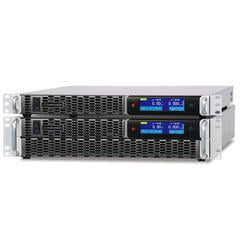
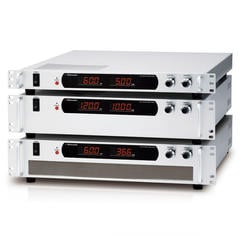
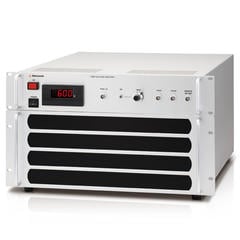
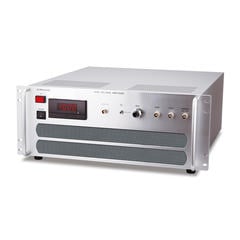
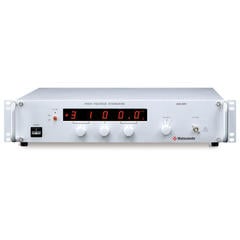
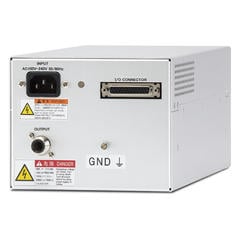
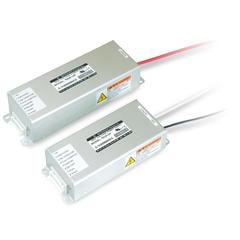
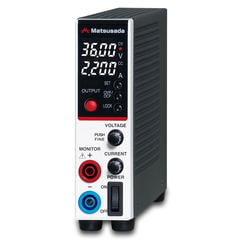
Modern AMS systems consist of multiple subsystems, including ion sources, tandem accelerators, electrostatic lenses, electrostatic analyzers (ESA), analyzing magnets, beam transport optics, and particle detectors. Achieving optimal performance from these components requires highly stable, low-noise power supplies capable of maintaining precise electrical and magnetic field control throughout the measurement process.
Power Supplies Required for AMS-Based Radiocarbon Dating
AMS combines accelerator technology with high-precision mass spectrometry. The stability and accuracy of the power supply systems directly influence analytical performance and measurement reliability. High-performance power supplies are therefore essential throughout the instrument.
1. High-Voltage Systems for Accelerator Terminals (MV Class)
- Applications
-
- Ion acceleration within tandem accelerators
- Maintenance of accelerator terminal potential
- Importance
-
These systems must maintain voltages ranging from several hundred kilovolts to several megavolts with exceptional stability. Even minor voltage fluctuations can alter ion energy, affecting mass resolution and measurement accuracy.
2. High-Voltage Power Supplies (kV Class)
- Applications
-
- Ion sources
- Electrostatic lenses
- Electrostatic analyzers (ESA)
- Detector bias systems
- Beam optics components
- Importance
Low-noise, highly stable high-voltage power supplies are required to generate, focus, transport, and analyze ion beams with high precision. Even small voltage fluctuations can affect beam trajectories and analytical accuracy.
3. Precision Magnet Power Supplies (Several A to Hundreds of A)
- Applications
-
- Steering magnets
- Analyzing magnets
- Beam transport magnets
- Importance
-
These power supplies precisely control magnetic fields used for beam steering and mass separation. Current instability can lead to beam drift and reduced separation performance, making low-ripple and highly stable current control essential.
4. Power Supplies for Ion Sources and Auxiliary Equipment
- Applications
-
- Cesium sputter ion sources
- Filaments
- Control electronics
- Auxiliary subsystems
- Importance
-
These power supplies play a vital role in maintaining stable ion generation and ensuring highly reproducible measurements during long-term operation.
Summary
Power supplies in AMS systems are not merely sources of electrical power; they are critical elements that directly influence ion beam quality, mass separation performance, and ultimately the reliability of radiocarbon dating results.
High-stability, low-noise, and high-precision power supply technologies form a fundamental foundation for achieving accurate and reproducible radiocarbon analysis using Accelerator Mass Spectrometry.
- Related Terms:
-
- Radiocarbon Dating
- Accelerator Mass Spectrometry (AMS)
- Carbon-14 Dating
- Tandem Accelerator
- High Voltage Power Supply
- Isotope Ratio Measurement