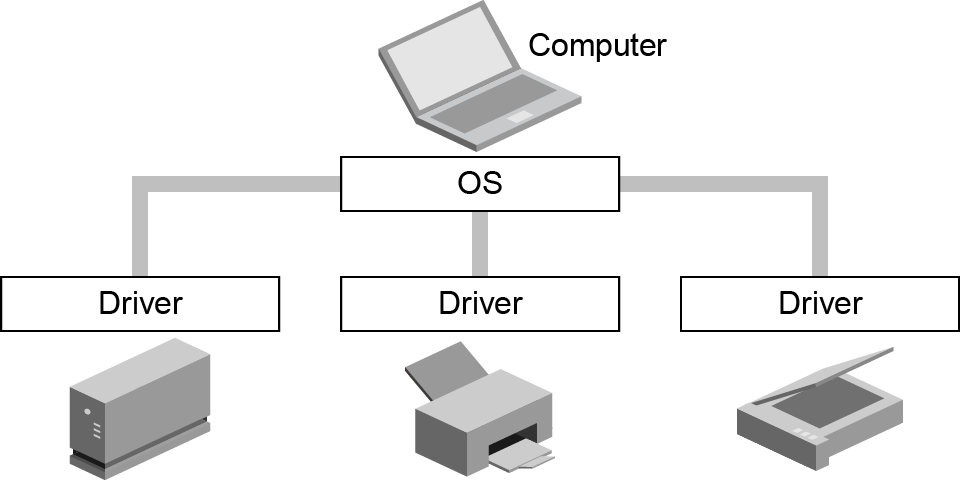

A Driver (or device driver) is specialized software that enables a computer's operating system (OS) and applications to communicate with specific hardware. Because devices such as programmable power supplies have unique command sets and protocols, they cannot communicate directly with the OS. The driver bridges this gap by translating generic software instructions into signals the hardware can understand.
For example, when an automation program sends a command to set a voltage, the driver converts this request into the specific low-level protocol required by the power supply and transmits it via interfaces like USB or Ethernet. This abstraction allows developers to control complex hardware without needing to write custom code for every communication detail.
In the test and measurement industry, VISA (Virtual Instrument Software Architecture) and IVI (Interchangeable Virtual Instrument) are standard driver formats. IVI drivers, in particular, provide a high level of abstraction, enabling engineers to swap instruments from different manufacturers with minimal changes to their control software.