
What is a Grid-Forming Inverter (GFM)?
Next-Generation Power Conversion Technology Supporting the Renewable Energy Era
In recent years, with the acceleration of decarbonization and the expanding integration of renewable energy, power grid operation has reached a major turning point. While solar and wind power generation are expanding rapidly worldwide, the proportion of traditional synchronous generators that have historically supported grid stability is declining.
To address this challenge, "Grid-Forming Inverters (GFM)" are attracting significant attention.
Traditional Power Grids and Synchronous Generators
Traditional power grids have been built primarily around synchronous generators installed in thermal, hydro, and nuclear power plants.
- Maintaining grid frequency
- Stabilizing voltage
- Providing inertial energy
In particular, the physical "inertia" possessed by the massive rotating mass of these generators has the effect of instantly suppressing frequency fluctuations (acting as a buffer) when sudden changes in load or power generation occur.
Challenges Arising from the Expansion of Renewable Energy
Most solar and wind power systems are connected to the power grid through power conversion systems (PCS) or inverters.
Because these systems lack a physical rotating mass directly synchronized with the grid (while wind turbines do rotate, they are electrically decoupled from the grid frequency by the inverter), they cannot provide sufficient inertia to the system.
- Increased frequency fluctuations
- Reduced grid stability
- Higher risk of power outages
What is a Grid-Following Inverter (GFL)?
Most inverters widely used today are classified as "Grid-Following Inverters (GFL)."
These inverters function as "current sources" that detect the voltage and frequency formed by the existing power grid and operate in synchronization with them.
Consequently, while they perform exceptionally well in environments with a stable power grid, they cannot form a grid on their own in the absence of a live grid or during large-scale blackouts.
What is a Grid-Forming Inverter (GFM)?
In contrast, a Grid-Forming Inverter (GFM) is an inverter that operates as a "voltage source," capable of independently generating its own voltage waveform and frequency to serve as a reference for the power grid.
- Provision of virtual inertia
- Frequency stabilization
- Voltage control
- Grid-forming (black-start) capabilities
In recent years, control technologies such as Virtual Synchronous Generators (VSG) and Virtual Oscillator Control (VOC) have been actively researched and commercialized.
Key Differences: Grid-Following (GFL) vs. Grid-Forming (GFM)
| Item | Grid-Following (GFL) | Grid-Forming (GFM) |
|---|---|---|
| Electrical Characteristics | Current Source (Measures grid voltage and injects current) | Voltage Source (Independently forms voltage waveforms) |
| Operation Mode | Grid-tracking | Grid-forming |
| Frequency Reference | Dependent on the grid | Autonomously generated |
| Inertia Provision | None (Some feature sensor-based synthetic inertia) | Yes (Instantaneous and inherent virtual inertia) |
| Islanded Operation | Difficult (Black-start not possible) | Possible (Black-start capable) |
| Microgrids | Limited suitability | Highly suitable |
| High-Renewable Grid Operation | Challenging | Advantageous |
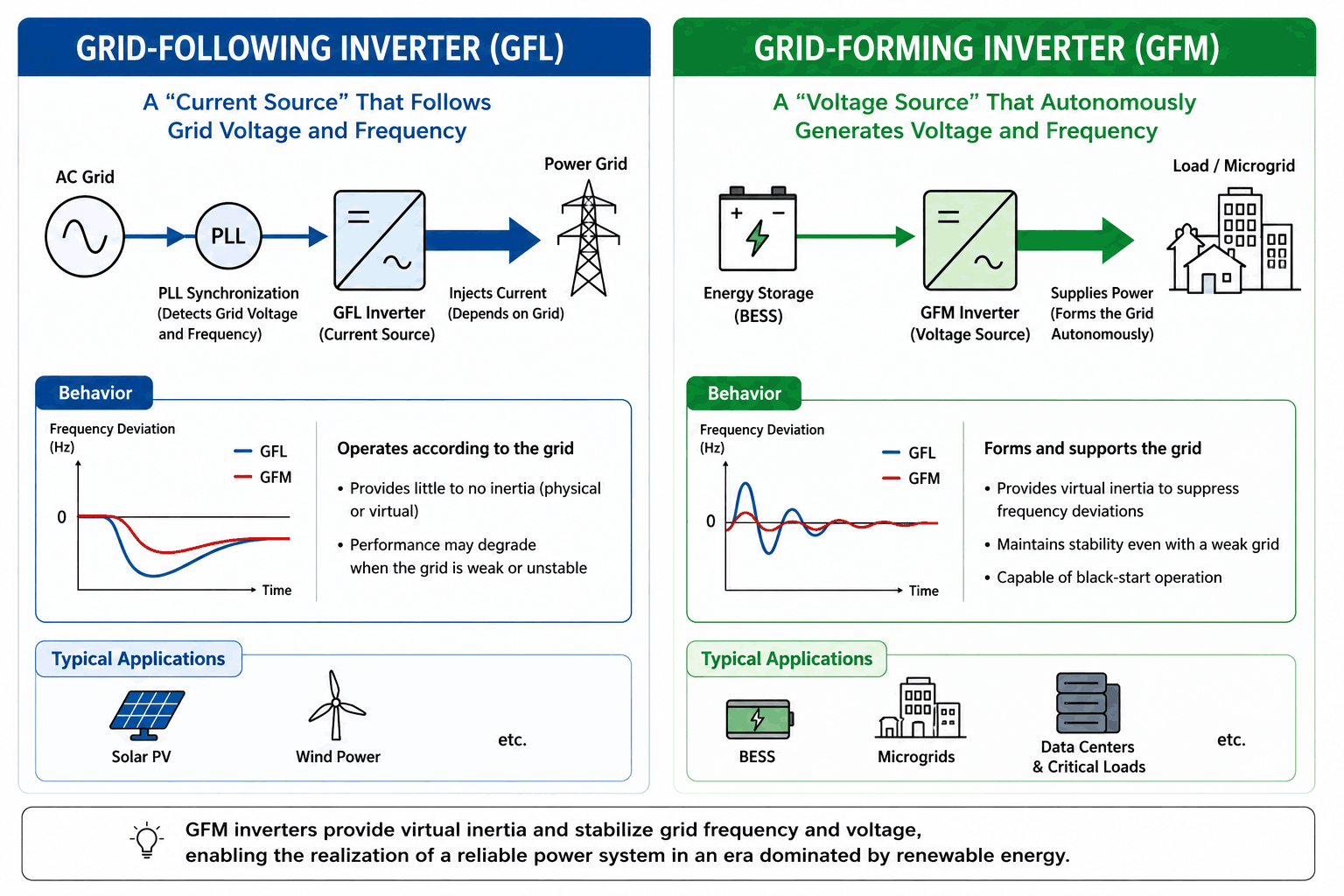
Main Applications
Grid-Forming Inverters (GFM) are primarily deployed in combination with energy storage systems in the following areas:
- Battery Energy Storage Systems (BESS)
- Microgrids and isolated island grids
- Backup power supplies for data centers
- EV (Electric Vehicle) charging infrastructure
- Large-scale renewable energy power plants (Wind farms, mega-solar utilities)
Testing Environments Required for Development and Evaluation
In the development of grid-forming inverters and BESS, testing environments capable of simulating various grid fluctuations and harsh conditions are indispensable.
- Battery Simulation Testing: Reproducing battery behavior and characteristics.
- PCS Evaluation Testing: Measuring the fundamental performance and efficiency of Power Conversion System (PCS).
- Frequency Response Testing: Observing responses to grid frequency disturbances.
- Power Fluctuation Testing: Evaluating performance against sudden load changes.
- Grid Code Compliance Evaluation: Verifying compliance with grid codes such as IEEE 2800, ENTSO-E requirements, and regional utility standards.
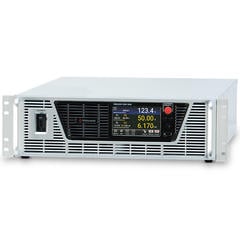
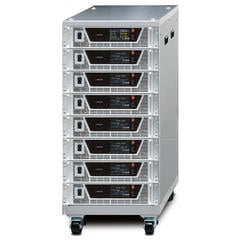
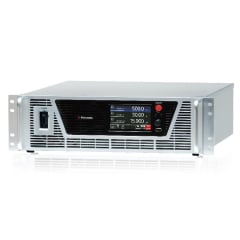
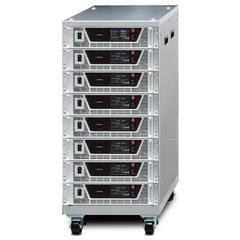
In these testing and evaluation fields, high-precision DC power supplies, regenerative DC power supplies that minimize energy waste, and high-capacity bidirectional DC power supplies capable of two-way power control play a vital role.
Conclusion
Grid-forming inverters are a core technology for ensuring stability in next-generation power grids characterized by high penetrations of renewable energy.
Moving forward, as BESS (Battery Energy Storage Systems) and microgrids become more widespread, the importance of GFM technology is projected to increase further.
- Related Terms:
-
- Grid-Forming Inverter (GFM)
- Grid-Following Inverter (GFL)
- Battery Energy Storage System (BESS)
- Microgrid
- Virtual Synchronous Generator (VSG)
- Renewable Energy Grid Integration