
Electrostatic discharge (ESD) occurs when a charged object, such as a human body, comes into contact with or approaches a conductor. While familiar in daily life as static shocks from doorknobs, this discharge involves high voltages that can cause malfunctions or catastrophic damage to sensitive electronic components.
In winter, when you touch a doorknob or try to get out of a car, you may feel a "buzz" of static electricity discharge. This is caused by a person's body being charged. In this way, when a charged conductor such as the human body comes into contact with or approaches another conductor, a violent discharge occurs.
Although harmless to everyday objects, ESD poses a significant threat to electronics. If a discharge event occurs directly to an electronic device, it can lead to immediate failure, latent defects, or permanent damage.
Since strictly preventing static buildup in all environments is difficult, electronic devices must be designed to withstand potential discharge events. ESD testing simulates these conditions to evaluate component durability and reliability.
ESD testing involves applying very fast, high-voltage pulses to the device under test. To generate these pulses, a capacitor is charged to a specific voltage and then rapidly discharged, which creates the required pulse.
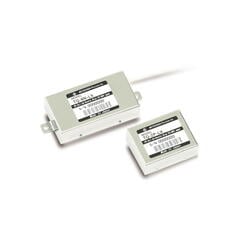
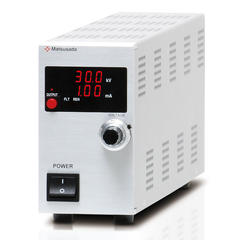
Matsusada Precision supplies the high-voltage power supplies needed to charge the capacitors used in ESD testing equipment.
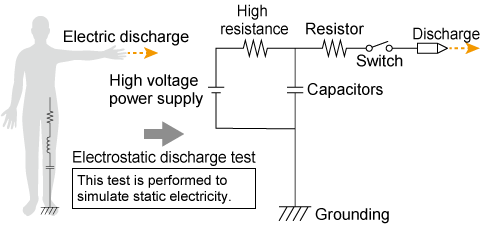
Our high voltage power supplies are used for electrostatic discharge experiments.
- Related Terms:
-
- ESD
- electrostatic discharge
Recommended products
We offer high-voltage power supplies ideal for charging the capacitors required for electrostatic discharge testing.