
A low-temperature active catalyst is one that exhibits increased activity at lower temperatures when an electric field is applied. Combining a catalyst with a high-voltage direct current (DC) electric field can promote chemical reactions at lower temperatures than previously possible. For example, some catalytic reactions that typically require high temperatures (600 K to 1000 K) have shown high activity at temperatures from room temperature to below 500 K when a DC electric field is applied. This technology is expected to be applied in the energy sector for the energy-efficient synthesis of chemicals like hydrogen and ammonia, thanks to its low-temperature operation.
Generally, chemical reaction rates are accelerated at higher temperatures. This temperature dependence is described by the Arrhenius equation. By applying an electric field to a solid catalyst, this method promotes chemical reactions even at low temperatures, exhibiting behavior that deviates from the Arrhenius equation.
- Related Words:
-
- low-temperature active catalyst
- DC electric field
- catalytic reaction
- Arrhenius equation
Recommended products
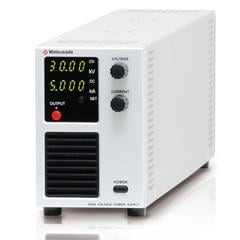
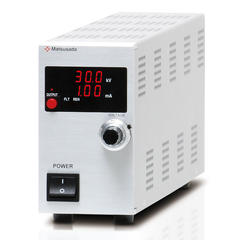
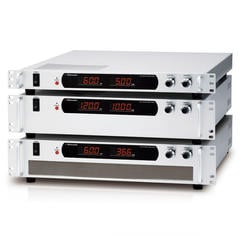
Our high-voltage power supplies are used for research on low-temperature active catalyst in an electric field.
Research on Post Treatment System with a Catalytic Activity in an Electric Field