
Electric field-assisted catalysis is a technique where applying a high-voltage direct current (DC) electric field to a catalyst promotes chemical reactions at significantly lower temperatures. While conventional catalytic reactions often require high temperatures (600 K to 1000 K) to proceed efficiently, applying an electric field can achieve similar activity levels at temperatures ranging from room temperature to below 500 K.
This technology enables energy-efficient synthesis of chemicals such as hydrogen and ammonia, offering a promising solution for sustainable energy applications. According to the Arrhenius equation, reaction rates typically increase with temperature. However, electric field application allows reactions to proceed efficiently at low temperatures, demonstrating reaction kinetics that deviate from standard thermal models.
Academic paper on Electric Field-Assisted Catalysis (Low-Temperature Activation) featuring Matsusada Precision's high-voltage power supply
- Related Terms:
-
- Electric field-assisted catalysis
- High-voltage DC field
- Catalytic reaction kinetics
- Arrhenius equation
Recommended products
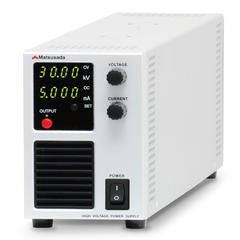
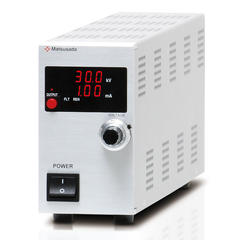
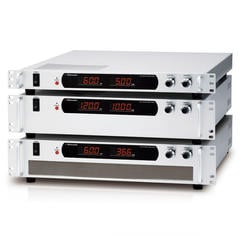
Our high-voltage power supplies are used for research on Electric Field-Assisted Catalysis (Low-Temperature Activation).